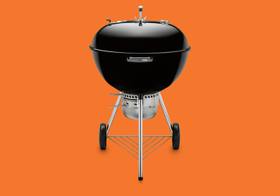
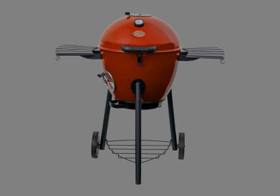
Weber sells two 22-inch Original Kettles. The plain one, part 741001, is $149.00 on Weber’s own store. This one, the Premium 14401001, is $229.00 there, and around $219 on Amazon in October 2026.
Both share one bowl diameter, one 363 square inch grate and one warranty schedule. So the $80 gap buys three parts. They are a lid thermometer, a hinged grate and an enclosed ash catcher.
None of those makes the fire hotter. The test in this grill review is whether they change what charcoal cooks can do. Our answer turns on how long your cooks run.
First Impressions of the Weber Original Kettle Premium Charcoal Grill 22
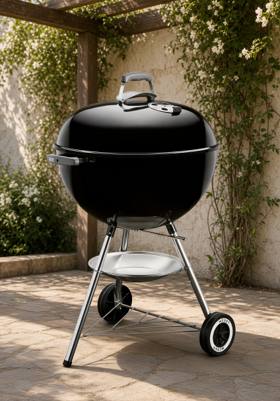
Unpacked, nothing about the silhouette has moved since your neighbour’s old one. The carton is low and square, light enough for one adult to drag indoors. You fit three legs, then the axle and wheels, then the wire shelf and the bucket.
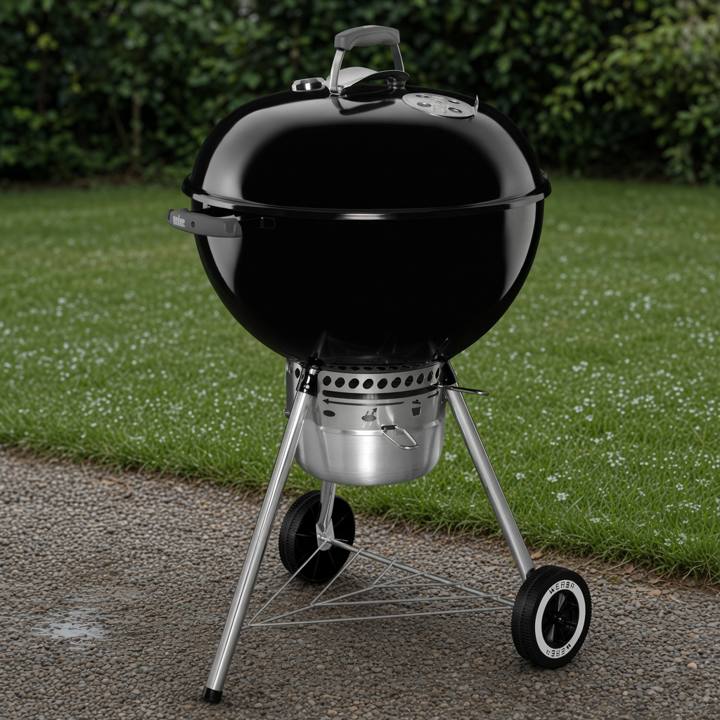
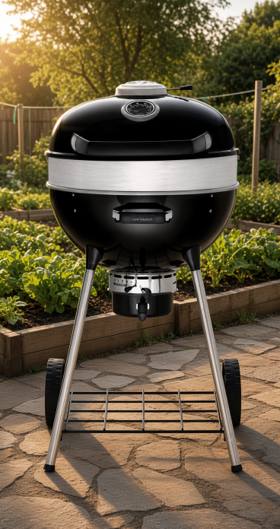
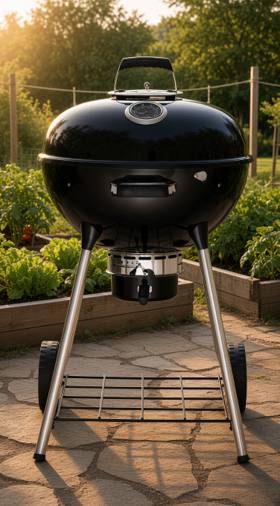
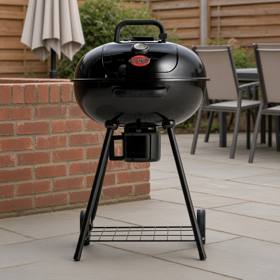
Two details mark it as the Premium. A small dial sits in the lid beside the handle, facing you. Under the legs’ junction, where a tray might sit, there is a closed bucket.
Once the coals catch, the hinges explain themselves. Each side of it has a hinged flap. Lift one, and you can see straight down to the coal bed beneath.
Thighs went first, skin down above the coals, with corn waiting on the far half. The thighs came off with crackled skin and a sweet smoky edge. The corn took longer than planned, which is the usual kettle lesson.
The second cook told us more. A pork shoulder went on mid-morning over a small bank of briquettes. By early afternoon the bank had shrunk, and the flap above it lifted cleanly. Six fresh briquettes went in, and the lid closed again inside a minute.
Key Features of the Weber Original Kettle Premium Charcoal Grill 22
What Weber adds here sits at the edges of the kettle, not in the bowl. The first three bullets are what the extra money pays for. The rest come with any Original.
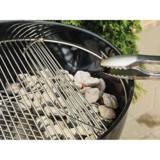
- Hinged plated-steel grate: Two sections flip up, one either side. Briquettes or wood chunks drop through without moving the food. The plain Original’s spec row lists a fixed grate.
- Lid thermometer: A dial mounted in the lid. It gives a dome reading at a glance, with no lid lift.
- Enclosed ash catcher: Turn the One-Touch handle and its blades push spent ash down into a lidded bucket. That bucket is why this model runs 27 inches deep against 25 for the plain one.
- Multiple vents or dampers: A lid damper and a bowl damper, both aluminium. Weber’s spec table counts one damper; its own feature list says lid and bowl.
- Lid hook: Hang the hot dome there and the grass stays clean. Weber fits this to the plain Original as well.
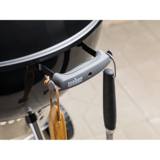
- Two tool hooks on the bowl handle: Tongs and a brush stay within reach, not on the lawn.
- Wire storage shelf and two wheels: The shelf ties the three legs together. The wheels let you tip it and roll.
- Cast-iron, LED controls, side burner: None. This is steel, enamel and fire.
The fire itself is the Original Kettle’s fire. Oxygen comes in low, passes the briquettes, and escapes high through the dome. Close the bottom vent and heat falls quickly; open it and the coals wake.
What changes is endurance. On a plain kettle, adding fuel mid-cook means lifting a hot, loaded grate. Most owners avoid it, so long cooks get planned around one load of coal.
Here, a flap lifts beside the meat and fresh briquettes go straight onto the bank. That is the Premium’s real cooking upgrade. A pork shoulder in its fourth hour is the cook it was built for.
The lid dial completes the loop. It reads the dome, not the grate. Expect it to differ from a probe at the meat. Treat it as a trend line: rising, steady or falling.
Where you pile the coals now decides how easy refuelling is. Bank the coals under one hinged flap, not under the middle of the grate. Then every top-up lands exactly where the fire already is. Put the meat on the fixed centre section, away from the flaps.
The 7.5 inch lid height sets a hard ceiling. A spatchcocked chicken sits comfortably under it. A whole bird stood upright on a can may not, so measure before you plan one.
Build, handling and durability
The bowl and lid are porcelain enamel fused onto steel, the same skin as every Original. It shrugs off a wire brush and rain. Weber does not state the steel’s gauge, on either kettle page.
The legs and dampers are aluminium, so neither rusts shut over a wet winter. You can grab either handle bare-handed mid-cook; both are glass-reinforced nylon. Nothing here asks for special care.
Weber’s own documentation is the weak spot. Under total area, the table prints 363. An image caption on the same page says 787.
Weber’s gallery artwork claims room for 13 burgers, while that caption claims 25. Trust the spec table, which matches the grate in front of you. A single 22-inch grate cannot hold the larger figure.
Weber lists no weight for the assembled grill. The carton is 37.3 pounds, packaging included. Tipped onto its wheels, the kettle rolls across grass like a hand truck.
Running costs, upkeep and value
The price question is sharper here than on most grills, because Weber prices the alternative itself. At $229.00 against $149.00, the Premium costs about half again as much. The cooking area, warranty and bowl do not change.
So value depends on what you cook. A burger night needs one load of coals and no dial. For that owner, the plain Original does the same job and keeps $80 in the pocket.
Run long cooks, and the sum shifts. A hinged grate and a lid dial are what a smoking owner would otherwise jury-rig. Bought as add-ons, a probe and the faff of grate-lifting cost more in time.
The small extras add up too. At $19.99, a pair of Char-Baskets holds that bank in place under the flap. A Rapidfire chimney is $24.99, and most charcoal cooks will want one.
Upkeep is quick. Sweep the One-Touch handle a few times and ash falls into the closed bucket. Unclip it, tip it into a metal bin, refit it. Let the ash go cold first, since buried embers survive for hours.
The warranty sorts parts by life expectancy. A hole through the bowl or lid within 10 years is Weber’s problem, not yours. The One-Touch system and plastics get five. The grate, dial and wheels get two.
A plated grate is a wear part and will dull with seasons. Replacement is cheap, which is fine. The accessory list is less kind. Weber’s 22-inch griddle insert is $169.99, most of the grill again.
Possible Weber Original Kettle Premium Charcoal Grill 22 Complaints
- The dial reads the lid, not the food: The thermometer sits high in the dome. On a two-zone cook it can disagree with the grate by a wide margin. Owners feel this on their first low-and-slow attempt. A cheap probe at grate level settles it.
- Weber’s page argues with itself: Area, burger count, damper count and even width against depth disagree across Weber’s own copy. None of it changes the cooking. It does make the listing harder to trust when comparing kettles.