
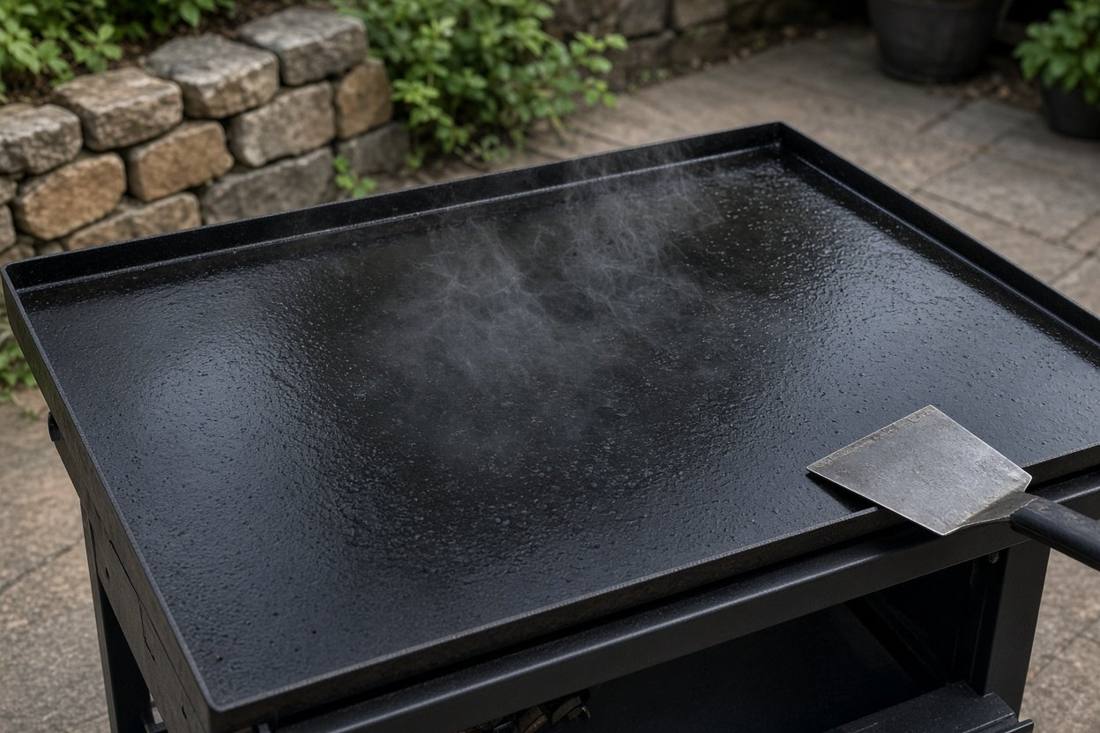
Wash and dry the new top, then wipe on a very thin layer of high smoke point oil and heat the griddle on high until it stops smoking. Let it cool a little and repeat four or five times, until the steel turns black. After every cook, scrape it clean and wipe on a thin coat of oil while it is still warm.
What seasoning is
Seasoning is oil baked onto the steel until it hardens into a thin, slick coat. Each coat bonds to the one below, and together they stop rust and stop food sticking. It is the same thing that makes an old cast iron pan black.
How to season a new griddle
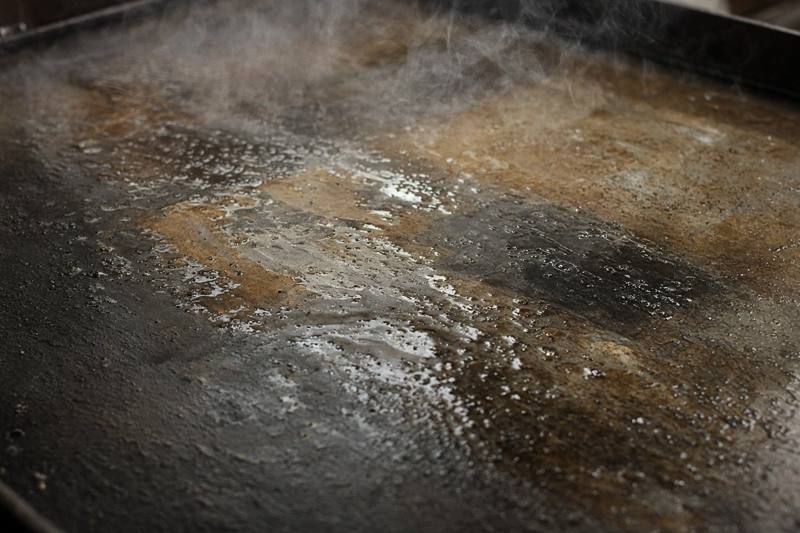
- Wash it once. New tops ship with a protective coating. Scrub with warm soapy water, rinse, and dry it completely. This is the only time soap should touch it.
- Heat it. Turn every burner to high for 10 to 15 minutes, until the steel starts to darken.
- Oil it, thinly. Pour a couple of tablespoons of oil and spread it over the whole top, edges and sides too, with a folded paper towel in tongs. Then wipe off as much as you can. Too much oil turns sticky instead of hard.
- Burn it in. Leave the heat on high until the smoke stops, about 15 to 20 minutes.
- Repeat. Do steps 3 and 4 four or five times, until the top is evenly dark brown to black.
Which oil to use
Pick an oil with a high smoke point and a mild taste: vegetable, canola, avocado, peanut or shortening all work, as do the seasoning blends griddle makers sell. Avoid butter and extra virgin olive oil for seasoning; they burn before they bond and leave a sticky, uneven coat. Flaxseed oil makes a hard coat but tends to flake on a griddle that sees heavy scraping.
After every cook
- While the top is still hot, scrape food and grease into the grease trap.
- Squirt a little water on stuck spots and scrape again; the steam lifts them.
- Wipe it dry, then spread a thin coat of oil over the whole top.
- Cover it once it cools. Rain and dew are what rust a griddle.
The chore our reviews keep finding
That after cook routine is the price of a griddle. Across the kinds of grill we score, griddles come last on our Maintenance score. And of our 16 griddle reviews, 12 name seasoning or oiling in the reason for that score.
Stainless and coated griddle tops ask less: some of the higher Maintenance scores among our griddles belong to plates that need little or no seasoning, or that lift out to wash.
How to fix rust or flaking
- Light rust: heat the top, pour on a little oil, and scrub the rust off with a scraper or a griddle stone. Wipe clean, then season two or three coats.
- Heavy rust: scrub down to bare steel with a griddle stone or coarse sandpaper, wipe off the dust, and season from scratch.
- Flaking: usually too much oil in a coat. Scrape the loose flakes, then season with thinner coats.
The best griddles we have scored
See every pick in our best griddles.
Questions people ask
- How many times should I season a new griddle?
- Four or five coats to start, until the whole top is dark. After that, the thin coat of oil after each cook keeps building it.
- Can I use soap on a seasoned griddle?
- Avoid it. A little mild soap will not ruin a well built seasoning, but it is never needed: heat, water and a scraper clean the top, and soap can dull a young coat.
- Can I season a griddle with olive oil?
- Light or refined olive oil works. Extra virgin smokes early and tends to leave a sticky coat, so save it for cooking.
- Why is my griddle sticky after seasoning?
- Too much oil, or not enough heat. Heat the top on high until it stops smoking; if it is still tacky, scrape it and do the next coat thinner.
- Do I need to season a stainless griddle?
- Usually not. Stainless tops resist rust without it, though a thin coat of oil before cooking still helps food release.