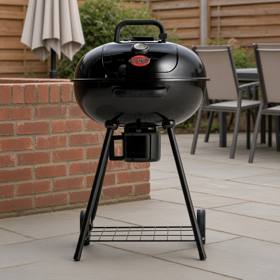
First Impressions of the Napoleon PRO22
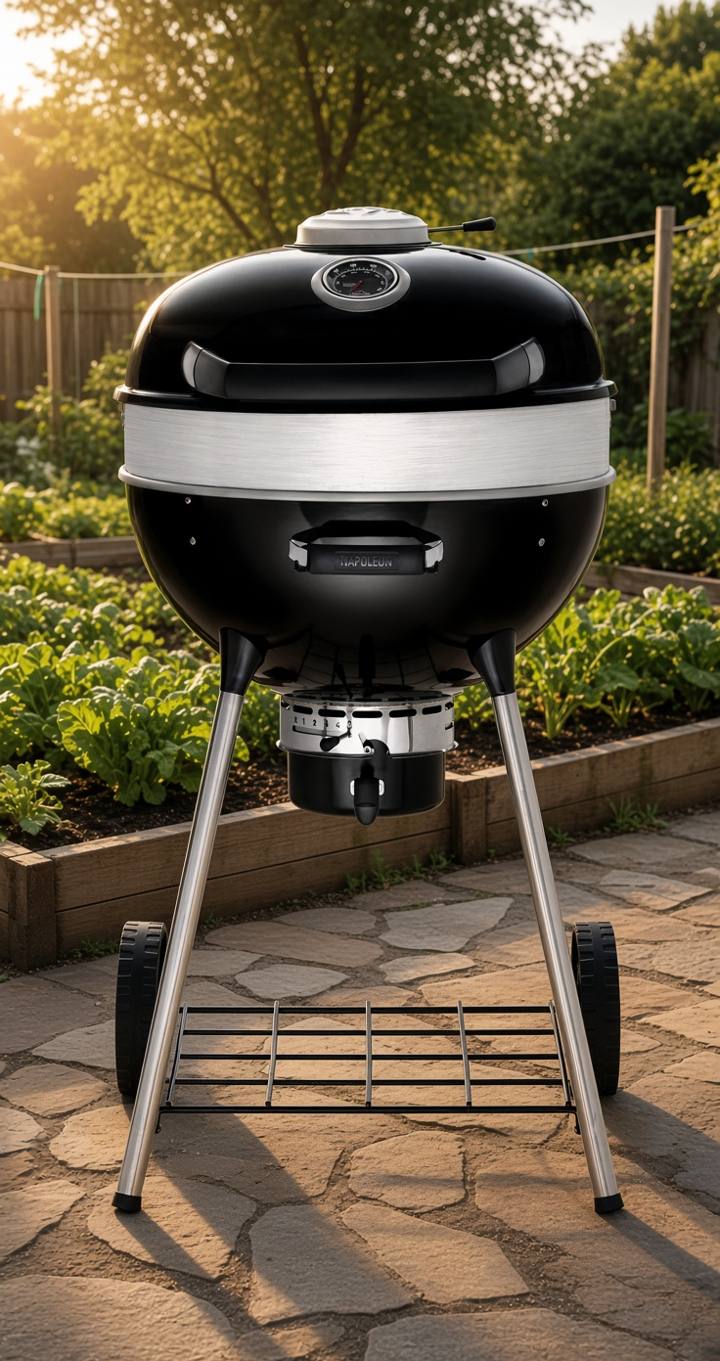
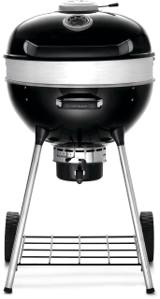
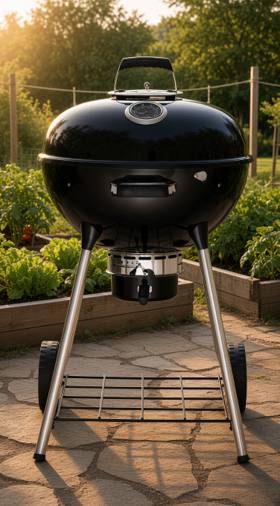
The first thing that looks different is the band of brushed stainless around the middle. It sits between a black porcelain bowl and a black porcelain lid. That ring is the grill’s argument, and the cheaper kettle has nothing like it.
The second is the lid. It does not lift off. It swings to one side on an offset hinge, and the whole grid opens at once. Standing open, the PRO22 reaches 63.25 in tall.
Assembly comes with a T25 Torx key, and it earns its keep. Four Torx screws hold the cast aluminum hinge. Loosen them, let the lid settle evenly on the ring, then tighten. Get that right before the first fire.
The manual asks for a 30 minute burn-off with every vent open. After that, the cast iron grids need seasoning before any food touches them. So the first cook arrives a little late. When it does, burgers come off with dark, wide grill marks.
Key Features of the Napoleon PRO22
Most of the kettle’s hardware is shared across Napoleon’s 22 inch line. These are the features that shape the cook. The parts the NK22 lacks are called out as they come.
- Cast-iron cooking grids. Porcelain-coated Iconic WAVE grids replace the NK22’s stainless grid. They hinge open for fuel and wood, and sit at three heights.
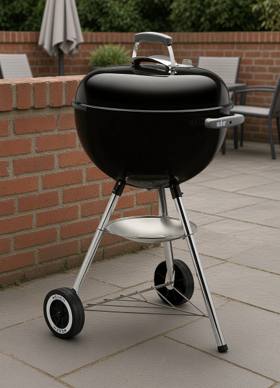
- Side-hinged lid. Napoleon lists it as standard on this kettle. The NK22 skips it and uses a lid hanger.
- Stainless steel extension ring. It raises the dome and carries covered spit ports and side probe doors. Napoleon calls it rotisserie ready.
- Rotisserie, sold separately. The heavy-duty kit 69241 lists at $89.99. Napoleon offers it for the PRO kettles and not for the NK22.
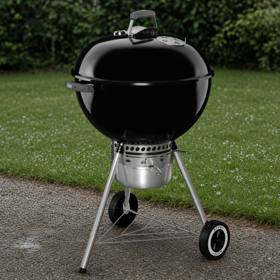
- Multiple vents or dampers. Precision inlets sit under the bowl, apart from the ash bucket. A Smoke Stack Chimney on the lid shrugs off gusts and rain.
- Vortex cone. A conical piece steers convection and pushes ash toward the bucket. The brochure table marks it standard on the NK22 as well.
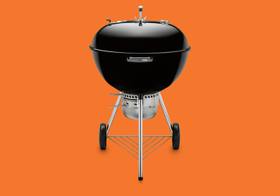
- Stainless steel legs and wheels. Four stainless legs, two 8 in wheels and a heavy gauge lower shelf.
- BBQ Cover. Not included. Napoleon’s cover 61915 fits both 22 inch leg kettles and lists at $55.99.
A kettle’s heat comes from its charcoal, and here the PRO22 has no edge. Napoleon gives both 22 inch models the same load. That is 50 briquettes for a direct cook, or 25 per side for indirect. The difference is where the food sits relative to that fire.
Three grid heights change the cook more than any vent. The lowest position, closest to the coals, is the searing spot. The middle suits everyday grilling. The top handles slow roasting, or holding food warm with the lid up.
Cast iron matters most at that low setting. The heavy bars soak up the fire’s heat, then brand the meat with it. A thin grid mostly just holds the food up. A thick steak notices the difference more than a sausage does.
The chimney simplifies control for newcomers. Per the manual, the top vent stays fully open or fully shut. You steer with the bottom inlet, so there is one dial to learn. Napoleon publishes no temperature range for the kettle, so we will not quote one.
Indirect cooking is where the ring earns a second look. Bank the coals to the sides, set a roast in the middle, and close the dome. A probe wire then slips through a side door rather than under the lid. The seal stays intact for the whole cook, and you never lift the lid to check.
Build, handling and durability
The PRO22 is built like a grill meant to live outside. The bowl and lid are porcelain-coated steel. Napoleon hides the fasteners inside, so weather has fewer edges to work on. The ring and the legs are stainless.
Napoleon says “heavy gauge” without printing a number, so the bowl’s thickness is unknown. The hinge is cast aluminum and adjustable.
That matters on a lid that swings rather than sits. A sagging hinge would let heat leak at one edge. The Torx adjustment fixes that in minutes.
The stand is a four-leg frame on two 8 in wheels, with no locking casters. Amazon’s listing mentions a locking caster, but Napoleon’s own brochure marks casters absent here. Roll it on firm ground and leave it parked.
Placement needs a little thought. The open lid stands 63.25 in high and swings out to one side. Napoleon also asks for 3 ft of clearance to anything combustible at the back and sides. On a narrow deck, check which way the lid swings before choosing a spot.
Running costs, upkeep and value
Fuel costs match the NK22, since the charcoal bed is the same size. For long cooks, add 8 briquettes per side for each extra hour. The real running cost is time spent on the grid.
By the manual’s own schedule, cast iron needs seasoning every 3 to 4 uses. Wash, dry, oil, heat, then oil again. Skip it and rust arrives, usually after a damp week.
Empty the ash catcher after every cook, once the grill is cold. A cover helps the grids most, and Napoleon sells one separately.
On value, the arithmetic is unkind. At Napoleon’s list prices the gap to the NK22 is $140. Amazon’s October prices put the two about $147 apart. The fire does not grow for that money.
What it buys is a lid that swings and cast iron in place of stainless. It also buys a ring with probe doors and spit ports. The extra money buys what happens above the coals, not the coals themselves. Against Weber’s $229.00 Premium 22, the Napoleon adds cast iron, three grid heights and probe doors.
Whether the ring pays off depends on the rotisserie. Without the $89.99 kit, its main daily job is the probe doors. With it, the PRO22 turns a spit, something the NK22 has no ports for.
Possible Napoleon PRO22 Complaints
- The cast iron asks for upkeep the cheaper kettle does not. Seasoning every 3 to 4 uses is a standing chore. A grill left under a cover for a wet month can come back spotted with rust. A brass brush and a fresh seasoning bring it back, but you have to do it.
- Napoleon cannot agree on its own cooking area. The product page prints 360 sq in, the brochure 365, and Amazon 363. None of that changes dinner. It does muddle any comparison you try to run on paper.