
The USDA safe minimums are 145 F for whole cuts of beef, pork, lamb and veal, then a 3 minute rest; 160 F for ground meat; 165 F for all poultry; and 145 F for fish. For steak, pull it at 130 F for medium rare. Brisket and pulled pork are done at 195 to 205 F, when they turn tender.
The chart on one thermometer
Doneness on the left, the USDA minimums and barbecue on the right, all on one scale.
Rare
Medium rare
Medium
Medium well
Well done
Whole cuts, fish
Ground meat
All poultry
Pulled pork, brisket
USDA safe minimum temperatures
Cook to at least these temperatures, measured with a food thermometer before you take the food off the heat. Figures from the USDA Food Safety and Inspection Service.
| Food | Minimum |
|---|---|
| Beef, pork, veal and lamb steaks, chops and roasts | 145 FRest at least 3 minutes |
| Ground meats (beef, pork, lamb) | 160 F |
| All poultry, including ground poultry, whole birds, breasts, legs, thighs and wings | 165 F |
| Fresh or smoked ham, uncooked | 145 FRest at least 3 minutes |
| Fully cooked ham, to reheat | 140 F165 F if not packaged in a USDA inspected plant |
| Fish and shellfish | 145 F |
| Leftovers and casseroles | 165 F |
Steak doneness temperatures
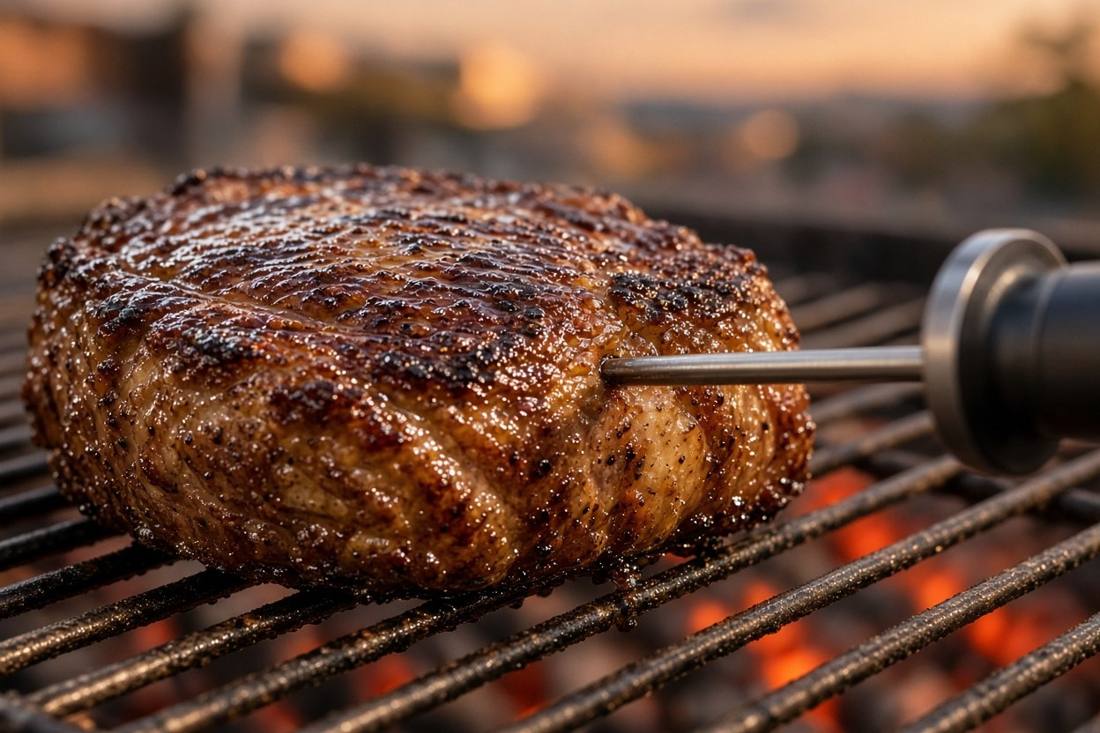
Meat keeps cooking after it leaves the grill, by about 5 F on a steak and more on a big roast. So take it off a little before the temperature you want.
| Doneness | Take it off at | After resting | Looks like |
|---|---|---|---|
| Rare | 120 F | 125 F | Cool red center |
| Medium rare | 130 F | 135 F | Warm red center |
| Medium | 140 F | 145 F | Warm pink center |
| Medium well | 145 F | 150 F | Slightly pink |
| Well done | 155 F | 160 F | No pink |
These are cooking targets, not USDA figures. Rare and medium rare sit below the USDA minimum of 145 F for whole cuts; ground beef should always reach 160 F.
When barbecue is done
Tough cuts are safe long before they are good. Their connective tissue melts between about 195 and 205 F, which is what makes them tender, so cook to texture and use the temperature as a guide.
| Cut | Done at | The test |
|---|---|---|
| Pulled pork (pork shoulder) | 195 to 205 F | The bone pulls out clean |
| Brisket | 200 to 205 F | A probe slides in like butter |
| Pork ribs | 195 to 203 F | The rack bends and cracks when lifted |
| Chicken thighs and legs | 175 to 185 F | Tender, juices run clear |
Planning a cook? Our tools work out how much brisket and how much pulled pork to buy per person.
Where to put the thermometer
Poultry: check the thigh too
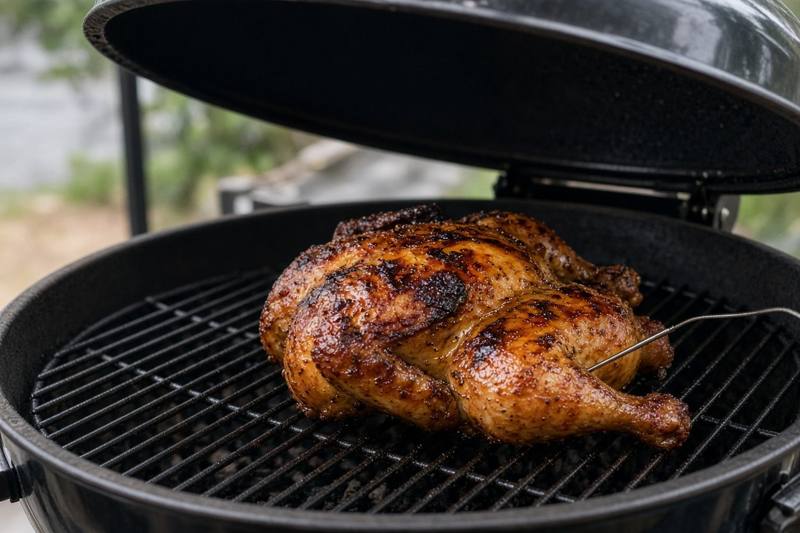
All poultry is safe at 165 F, but breast and thigh cook differently. Breast is juiciest taken off as soon as it reaches 165 F. Thighs and legs stay safe at 165 F but are chewy there; they turn tender at 175 to 185 F.
On a whole bird, check both the breast and the thigh, and go by the lower reading.
Questions people ask
- Is pork safe at 145 F?
- Yes. The USDA lowered whole cuts of pork to 145 F with a 3 minute rest in 2011. It will be slightly pink in the middle, and safe. Ground pork still needs 160 F.
- What temperature is medium rare steak?
- Pull it at about 130 F; it rises to about 135 F as it rests.
- Why is my brisket stuck at 160 F?
- That is the stall: moisture evaporating from the surface cools the meat for hours. Wait it out, or wrap the brisket in butcher paper or foil to push through.
- How long should meat rest?
- At least 3 minutes for steaks and chops, which the USDA counts as part of the safe cook; 10 to 20 minutes for roasts and whole birds; an hour or more, wrapped, for brisket and pork shoulder.
- Can you trust the thermometer on the grill lid?
- Not for meat. It reads the air near the lid, often many degrees off the grate, and never tells you the inside of the meat. Use a probe thermometer.