Best Gas Grills of 2026
Full size propane and natural gas grills on a cart. Portable and built-in grills have their own lists.

A good gas grill lights first time and holds an even heat from edge to edge.
That is what you are paying for, and what our grill reviews check first. Shiny extras matter far less than burners that last and grates that sear.
Think about how many you cook for, then buy a little bigger. Nobody ever wished their grill were smaller.
We tested 54 gas grills for this guide. Most of them do well on how hot and how evenly they cook. Where most fall short is how easy they are to keep clean, so that is where the picks below stand apart.
Our picks
- Best overall
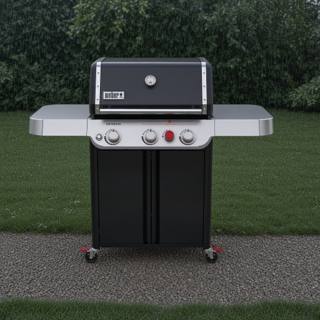 Weber Genesis E-325 Gas Grill Near $849 with a sear burner, while Weber lists the sear-less E-315 at $899. Check price at Walmart
 - Best gas grill for the money
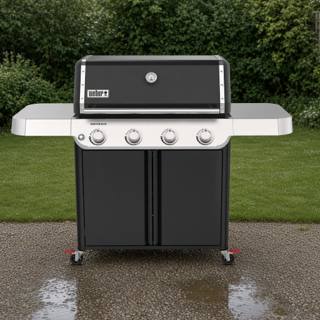 Weber Genesis E-415 Gas Grill Cheapest of the five four-burner Genesis grills Weber lists, and the four above it share its grate and its 48,000 BTU. $1,299 at Amazon
 - Best gas grill for searing steaks
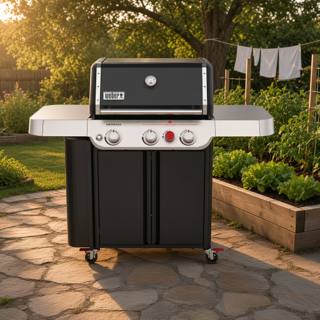 Weber Genesis E-330 Gas Grill A dedicated 13,000 BTU sear burner under cast iron, on top of three even mains, which almost nothing under $999 offers. Check price at Walmart
 - Best gas grill for beginners
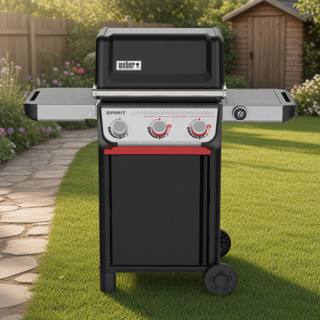 Weber Spirit EX-325 Smart Gas Grill Nothing else near this price lights each burner one-handed and then reports grill and food temps to a phone. $599 at Amazon
 - Best gas grill that will last
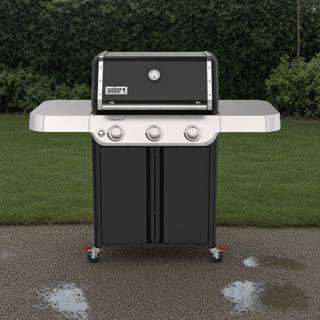 Weber Genesis E-315 Gas Grill Twelve years on cookbox and lid, ten on everything sitting in the fire, five under the rest, better cover than rivals at this price. $899 at Amazon
 - Best gas grill under $300
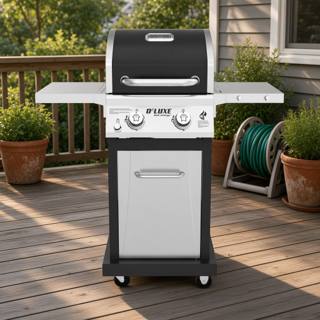 Nexgrill Deluxe 2-Burner Gas Grill Push-to-start ignition on each burner, folding stainless shelves and a lid gauge make a weeknight cook nearly thoughtless. $299 at Amazon
 - Best gas grill under $500
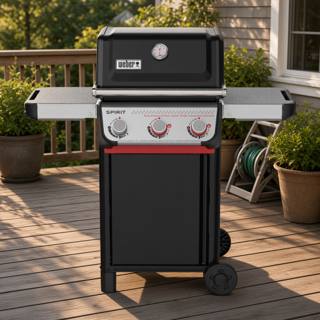 Weber Spirit E-325 Gas Grill Two Boost Burners give one grate two real working heats, at close to 86 BTU per square inch over the primary grate. $499 at Amazon
 - Best gas grill under $1,000
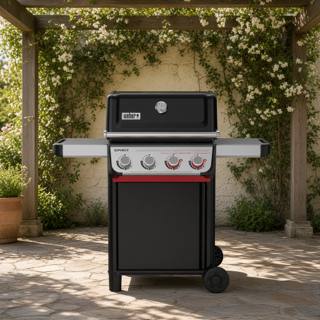 Weber Spirit E-425 Gas Grill Cast iron, stainless bars and a closed cabinet, holding 103 pounds steady across a 51.80 inch frame. $629 at Amazon
Prices are what the retailer charged when we last checked. More on each pick below.
Best gas grill overallWeber Genesis E-325 Gas Grill
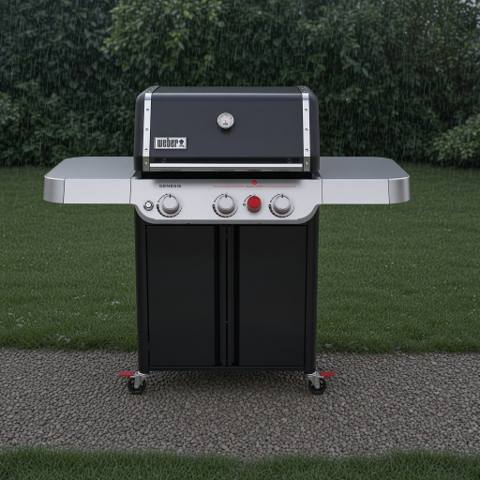
Weber stopped selling this grill and kept selling the cheaper one without its best feature. At around $849 that is a strange and temporary piece of luck. Buy it for the red knob. Register it the week it lands, and file the specification somewhere findable.
Good to know: The grease tray pulls straight out, but cast iron grates and a fourth burner add to every clean-down.
Best gas grill for the moneyWeber Genesis E-415 Gas Grill
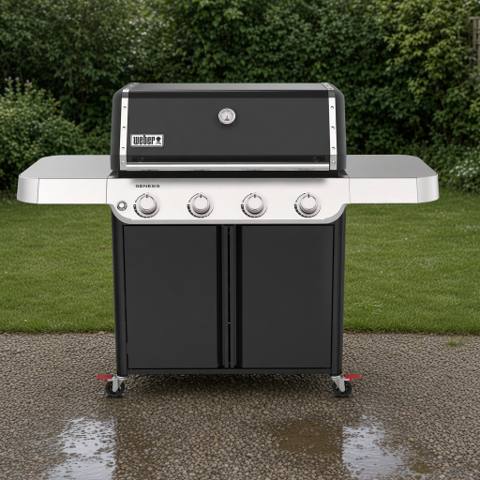
The E-415 is where fire and grate stop growing in the Genesis range. Everything above it charges for hardware bolted around a cookbox you already have. If you want a big, even, four-zone surface, this is the one. You just have to plan your own sear.
Why it won this award: Cheapest of the five four-burner Genesis grills Weber lists, and the four above it share its grate and its 48,000 BTU.
Good to know: Enamel on the grates and on the lid is a wear surface, and the painted doors carry only two years.
Best gas grill for searing steaksWeber Genesis E-330 Gas Grill
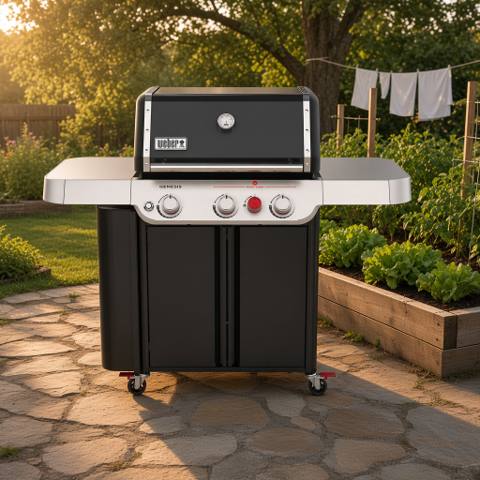
Buy the E-330 if you already cook in zones. Weber did not make this grill bigger. It made one corner of it disagree with the rest. That disagreement is the only thing here worth paying extra for.
Why it won this award: A dedicated 13,000 BTU sear burner under cast iron, on top of three even mains, which almost nothing under $999 offers.
Good to know: The $200 over an E-315 buys one sear burner, no extra square inch, the same cabinet and still no side burner.
Best gas grill for beginnersWeber Spirit EX-325 Smart Gas Grill
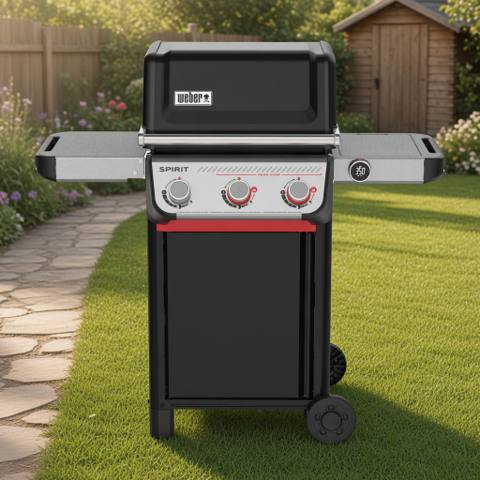
Weber did not build a better Spirit here, it built one that reports back. On a long, slow cook that is genuinely useful, and the alerts are not oversold. Buy it for the waiting, not for the fire.
Why it won this award: Nothing else near this price lights each burner one-handed and then reports grill and food temps to a phone.
Good to know: Removable grease tray helps, yet cast iron wants oiling and there is now a probe, a display and cells to mind.
Best gas grill that will lastWeber Genesis E-315 Gas Grill
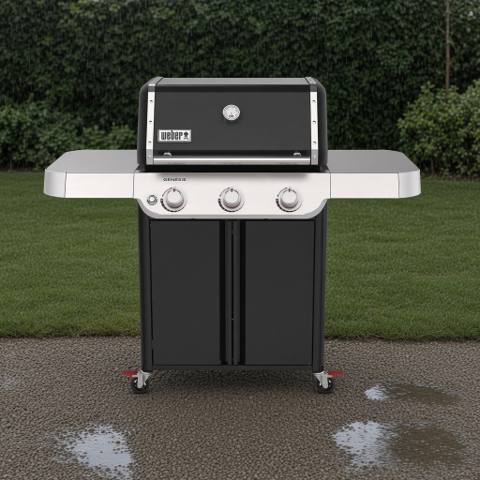
Buy the E-315 if you want one large surface that behaves the same everywhere. Weber drew no map on this grate, so you make the cool side yourself. The money goes into area and into years, and Weber puts both in writing.
Why it won this award: Twelve years on cookbox and lid, ten on everything sitting in the fire, five under the rest, better cover than rivals at this price.
Good to know: The listed $899.00 buys area and warranty years, while the Crafted grillware that widens its range is charged separately.
Best gas grill under $300Nexgrill Deluxe 2-Burner Gas Grill
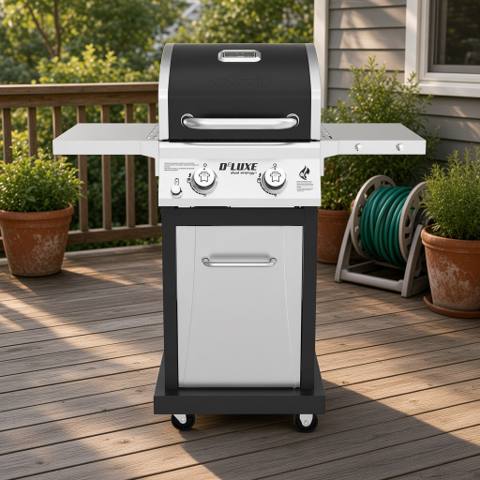
The cookbox is not small. The cart under it is, and that is where the savings were taken. If 42.52 inches fits your patio, two zones may be enough. Model 720-0864RA gives you more fire and more iron than $299.00 usually buys.
Good to know: Eight years sits on the main burners alone. Nothing else on this grill carries a published term.
Best gas grill under $500Weber Spirit E-325 Gas Grill
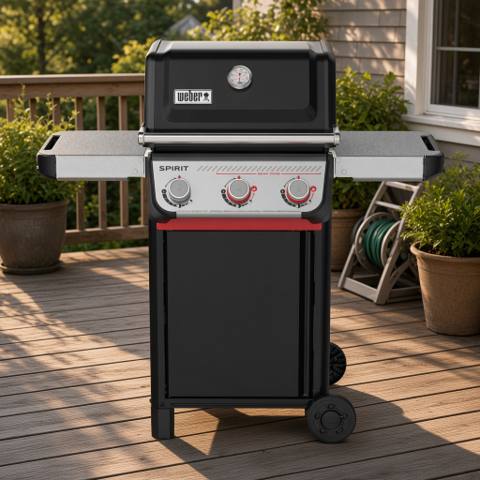
Buy the E-325 if you want two working heats on one grate without banking coals. The Sear Zone is a genuine change in how a Spirit gets cooked on. Just understand what Weber did here. It did not add fire; it gave the fire an address.
Good to know: The grease tray slides out and empties fast, but chipped enamel on cast iron rusts.
Best gas grill under $1,000Weber Spirit E-425 Gas Grill
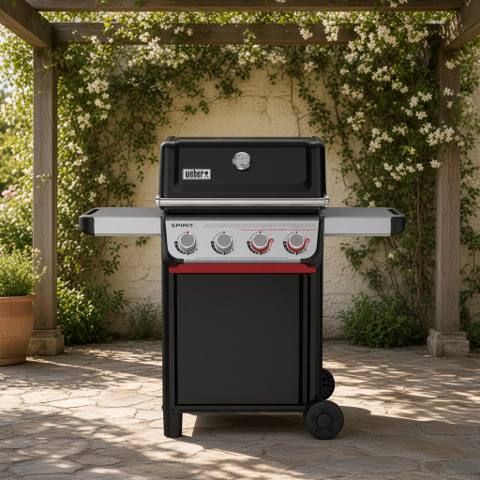
Buy the E-425 if the small side of a three-burner keeps running out of room. The fourth burner is a holding burner, not a searing one. Understood that way, it earns its place. Mistake it for more crust and the step up is money spent on the wrong grill.
Good to know: Stepping from $549.00 to $629.00 adds a burner and grate, but not a third Boost Burner.
Questions people ask
What is the best gas grill?
Our top pick is the Weber Genesis E-325 Gas Grill. Weber stopped selling this grill and kept selling the cheaper one without its best feature. At around $849 that is a strange and temporary piece of luck.
What is the best value gas grill?
The Weber Genesis E-415 Gas Grill. Cheapest of the five four-burner Genesis grills Weber lists, and the four above it share its grate and its 48,000 BTU.
How much should I spend on a gas grill?
Most of the gas grills we tested cost between $590 and $1,000. Across all our scores, paying more buys a little, and much less than the price tag suggests.
Which brand makes the best gas grills?
Of the brands we tested at least twice here, Weber did best across its 11 models, ahead of Broil King. A single great model matters more than the badge, so judge each gas grill on its own.
Is a gas grill the same as a propane grill?
Not quite. Most run on propane from a tank, but many can use natural gas instead. A natural gas grill connects to your home supply and never runs out. The two use different parts, so buy the version that matches your fuel.
How long does a propane tank last on a grill?
It depends on the size of the grill and how hot you cook. A standard 20 lb tank usually covers many cookouts at medium heat. Keep a spare tank so you never run dry in the middle of a cook.
How long does a gas grill take to heat up?
Most gas grills are ready in about 10 to 15 minutes with the lid closed. Give the grates that full time before searing. Hot grates make better marks and release food more easily.
Can you smoke meat on a gas grill?
Yes. Put wood chips in a smoker box or a foil pouch over one lit burner. Cook the meat on the unlit side with the lid shut. You get real smoke flavor, though lighter than a dedicated smoker.
How long should a gas grill last?
A well made gas grill that is cleaned and covered can last many years. Burners, grates and igniters wear out first, and they can usually be replaced. A grill with parts still sold for it lives far longer.
How we picked
Every pick comes from our own testing, scored the same way across six things that matter to an owner. The overall pick is the highest Avid Griller Score. For the money, for searing steaks, for beginners and that will last go to the top Value, Heat Performance, Ease of Use and Long-term Reliability scores. The price picks are the top scorer priced under $300, $500 or $1,000 at the retailer we checked. How we score.
Looking for something else? See all our best grill guides.