
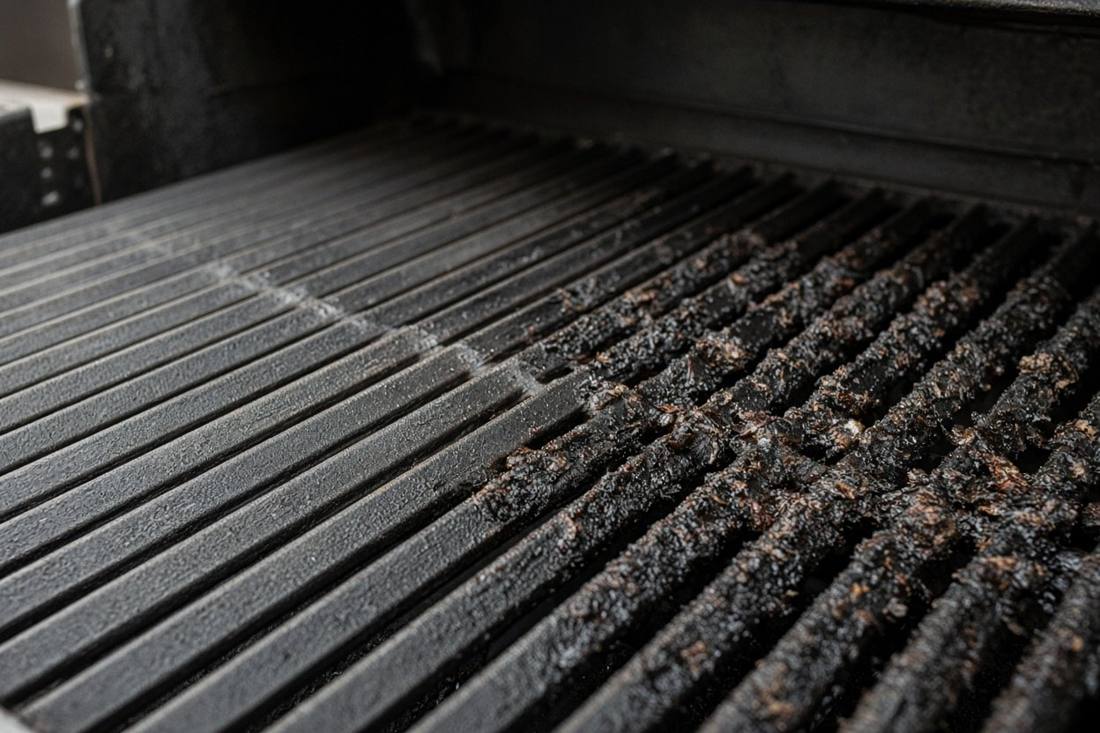
After every cook, heat the grill on high for 10 to 15 minutes to burn off the residue, then scrape the grates while hot with a bristle free brush, a wooden scraper or a ball of foil, and wipe on a thin coat of oil. A few times a season, take the grates out and soak and scrub them. Skip wire bristle brushes.
After every cook
- Burn it off. With the lid closed, run the grill on high for 10 to 15 minutes, before or after you cook. Grease and sauce turn to dry ash.
- Scrape while hot. Use a bristle free brush, a wooden scraper, or a crumpled ball of foil held in long tongs. Hot residue comes off easily.
- Oil lightly. Fold a paper towel, dip it in a little oil, and wipe the grates with tongs. It stops rust and helps food release.
Why not a wire brush?
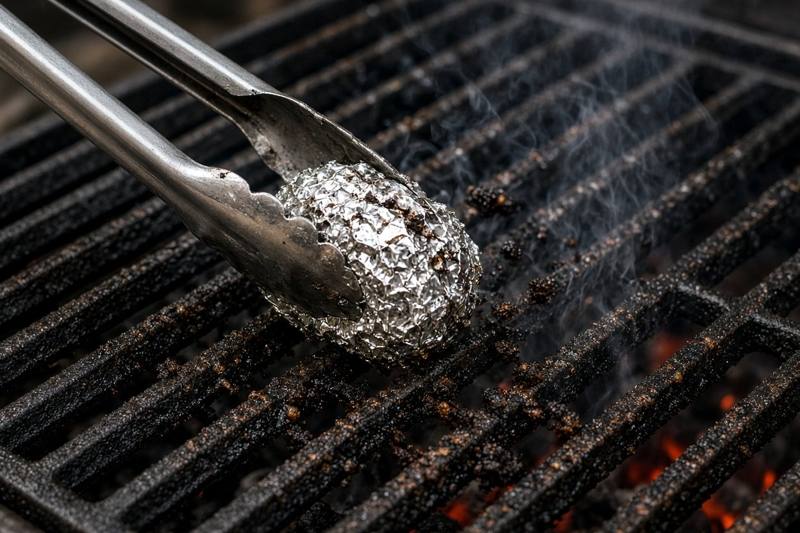
Wire bristles break off, stick to the grates, and end up in food. The CDC has reported people treated in hospital for swallowed grill brush bristles lodged in the throat and gut.
Our page on whether wire brushes are safe has the full evidence. A ball of foil, a wooden paddle that wears grooves to fit your grates, a coil brush or a nylon brush used on a cool grate all do the job without loose wire. If you keep a wire brush, check it before each use, and wipe the grates with a damp cloth afterwards.
Clean by grate material
The material decides how hard you can scrub and what follows the scrubbing.
DoScrape hot, then wipe on a thin coat of oil so it does not rust.
AvoidSoak it in water or leave it wet. Rust starts overnight.
DoScrape hot. It can take a soak in soapy water and a stiff scrub pad.
AvoidUse harsh oven cleaner, which can stain it.
DoScrape gently with a nylon or wooden scraper while warm.
AvoidUse metal scrapers or wire brushes. A chip lets rust in under the coating.
Which grates are easiest to keep clean?
Our reviews name the grate material when it matters to the score. Here is the average Maintenance score of the grills whose reviews name one material, 43 in all.
Stainless steel grates come out easiest to live with (8.3) and cast iron grates hardest (7.9), because cast iron needs oil after cleaning or it rusts. The gap is modest; regular cleaning matters more than the material.
Deep clean, a few times a season
- Let the grill cool and lift the grates out.
- Stainless and porcelain: soak in hot water with dish soap for an hour, or overnight in a bin with a cup of baking soda, then scrub with a non scratch pad.
- Cast iron: skip the long soak. Scrub with hot water and a stiff brush, dry over the lit grill, then oil.
- While the grates are out, scrape the flame tamers or heat plates and brush the burner ports clear.
The easiest grills to keep clean, on our scores

Questions people ask
- How often should you clean grill grates?
- Scrape them every time you cook, and deep clean them two or three times a season, more if you grill several times a week.
- Can you put grill grates in the dishwasher?
- Stainless grates often fit and come out fine. Never cast iron, which rusts, and avoid it for porcelain coated grates, which can chip. Check your manual.
- Can you use oven cleaner on grill grates?
- On bare stainless or cast iron, sparingly, followed by a thorough rinse; never on porcelain coating. Most of the time, heat and a scraper make it unnecessary.
- How do you get rust off cast iron grates?
- Scrub the rust off with steel wool or a wire pad, wash and dry, then coat with oil and heat the grill for 30 minutes to season the iron again.
- Does vinegar and baking soda clean grill grates?
- For a stubborn soak, yes: a paste of baking soda, or a soak in vinegar and baking soda, loosens baked on grease on stainless and porcelain grates. Rinse well and dry.