
Lump charcoal is plain wood burned down to charcoal: it lights fast, burns hot and leaves little ash, but it burns out sooner and unevenly. Briquettes are charcoal dust pressed into even shapes with a binder: they burn cooler, steadier and longer, and cost less. Use lump in a kamado and for hard searing; use briquettes in a kettle or a smoker when you want steady heat for hours.
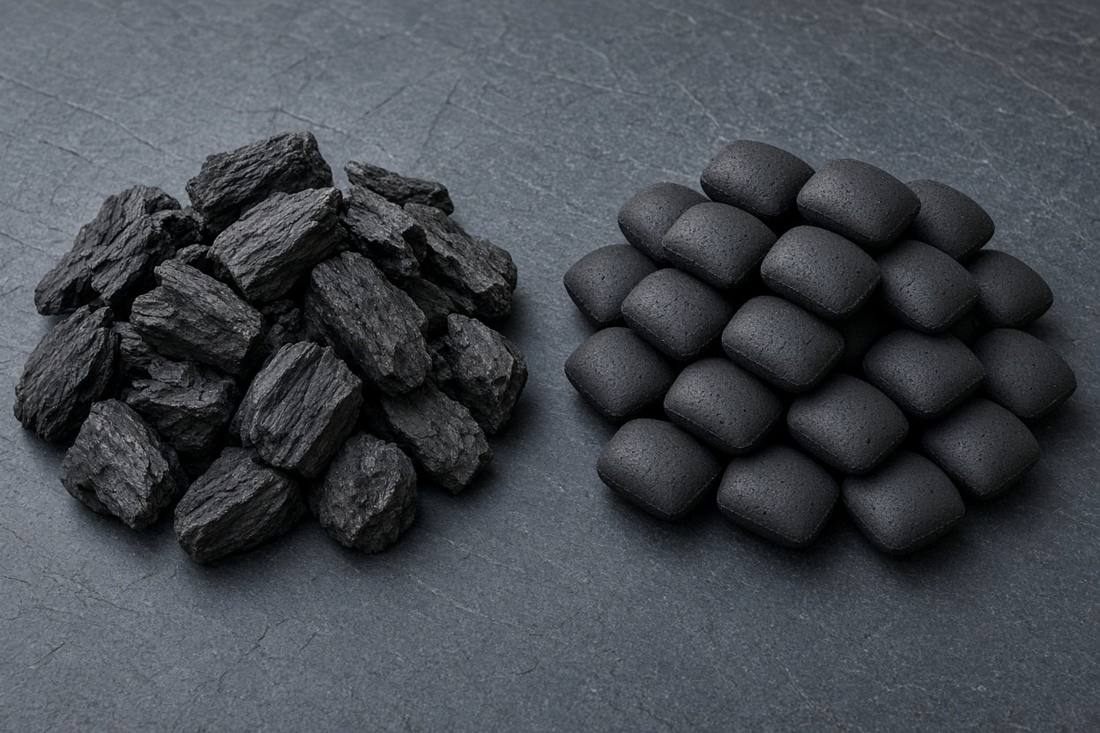
The difference at a glance
| Lump | Briquettes | |
|---|---|---|
| Made from | Pieces of hardwood, charred | Charcoal dust and wood scraps, pressed with a starch binder |
| Lights | Fast, in about 10 to 15 minutes | Slower, about 15 to 20 minutes in a chimney |
| Heat | Hotter at the peak | Lower, and more even |
| Burn time | Shorter | Longer and steadier |
| Ash | Little | A lot |
| Size | Mixed, from dust to fist sized | All the same |
| Cost | Higher per pound | Lower per pound |
How each one burns
The biggest practical difference is the shape of the fire over time. Lump gives you heat quickly and a hotter peak. Briquettes take longer to come up, then hold a long, flat plateau, which is why the classic low and slow method on a kettle uses them.
Lump charcoalBriquettes
What is inside each
Hardwood burned with little air until only carbon is left. Nothing is added, so what you see is what burns: you can often spot the wood grain. Bags vary a lot, from big even chunks to a bottom layer of dust and scraps.
Charcoal dust and wood scraps, held together by a starch binder, often with a mineral such as limestone added so they burn evenly and ash white. That is why every one is the same shape and burns at the same rate. Instant light briquettes are soaked in lighter fluid; avoid those for cooking low and slow, since the smell can carry into the food.
What our reviews tell owners to use
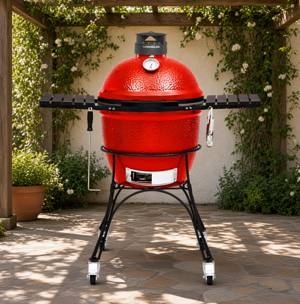
We read every one of our 12 kamado reviews for the fuel they talk about. 8 of 12 mention lump charcoal, and none mention briquettes. Kamado makers point the same way: lump makes far less ash to clog the small vents and charcoal grate, and some warn against briquettes and lighter fluid outright.
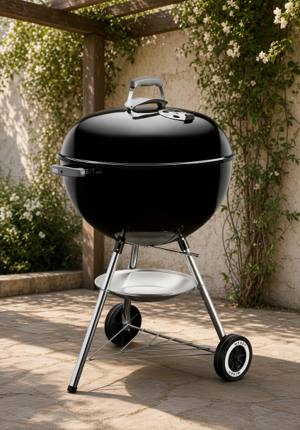
Kettles, barrels and smokers take either. Most people use briquettes there for long cooks and cost, and lump when they want a hot, fast sear.
How to light either one
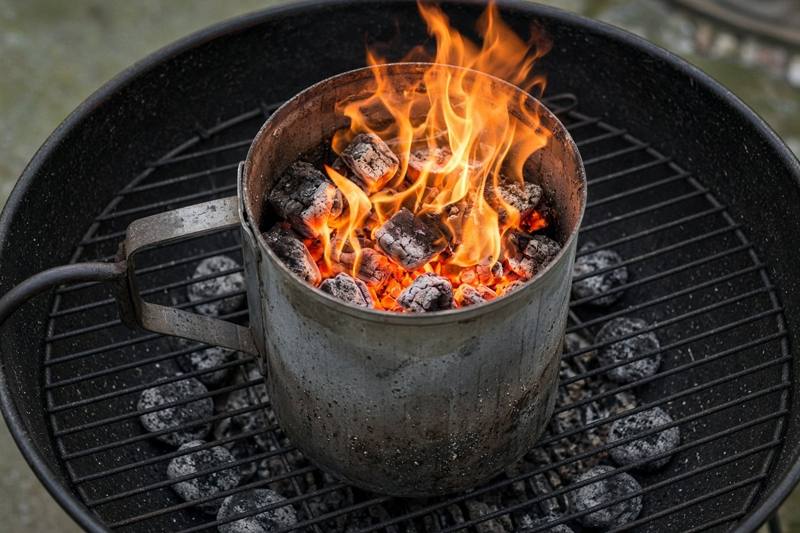
Use a chimney starter: fill it, light a fire starter or a sheet of newspaper underneath, and wait until the top coals are covered in gray ash. Lump is ready in about 10 to 15 minutes, briquettes in 15 to 20.
Then pour the coals where you want them, to one side for a two zone fire. In a kamado, light a few spots in the lump with fire starters instead, and let the vents bring it up. Skip lighter fluid in either case.
Questions people ask
- Can you mix lump charcoal and briquettes?
- Yes. Some cooks start a fire with lump for quick heat and add briquettes for a longer, steadier burn. It works in any kettle or smoker.
- Which is better for smoking?
- Briquettes, in most smokers: they hold an even low temperature longer. Kamados are the exception, because their vents and thick walls hold a low lump fire steady for hours.
- Is lump charcoal healthier?
- Lump has no binders or additives, so it burns cleaner. How you cook matters more than the fuel: our gas vs charcoal guide covers the safer way to grill.
- Why does lump charcoal spark and pop?
- Moisture and air pockets in the wood. It settles once the fire is going; keep the lid down in the first minutes and do not light it near anything that can catch.
- Does charcoal go bad?
- Not if it stays dry. Damp charcoal is hard to light and smokes. Keep bags off the floor in a sealed bin, and reuse unburned pieces from the last cook by shaking off the ash.