
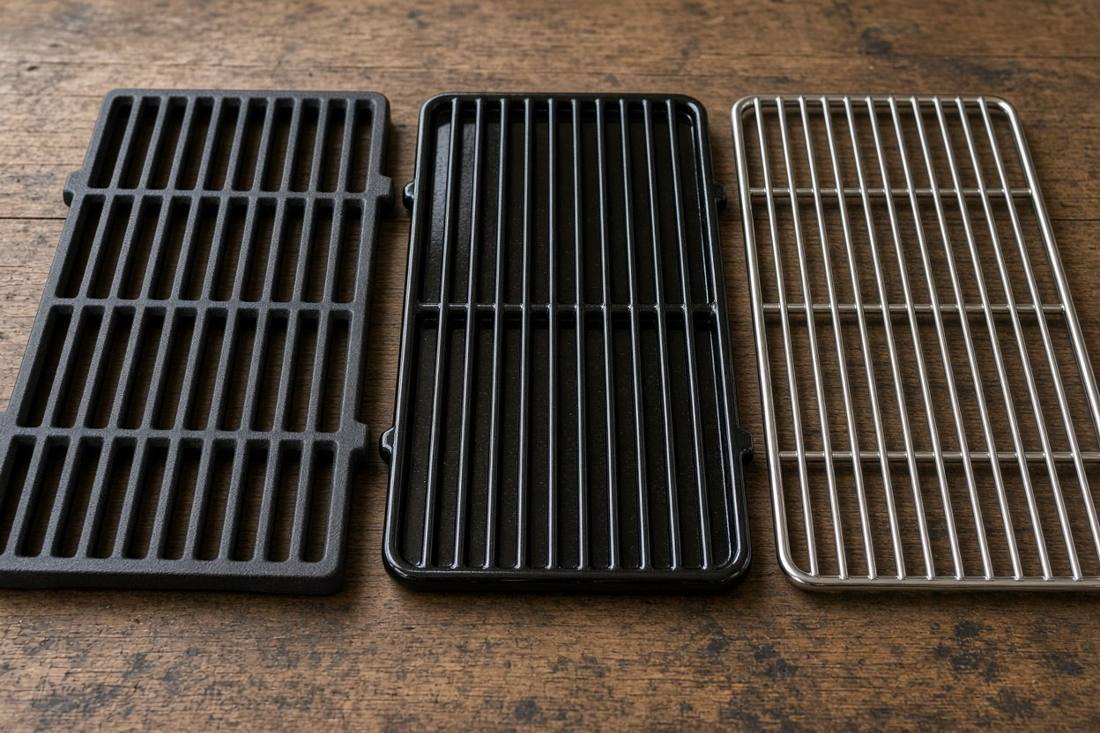
304 stainless has nickel in it and resists rust far better than 430, which is cheaper and holds a magnet. For the grates, cast iron sears best but rusts unless oiled, porcelain coating is easy care until it chips, and thick stainless rods need the least care of all. Spend on the parts that take heat and grease: the burners, the cookbox and the grates.
What each part of a grill is made of
Makers mix materials, and the box usually names only the best one. Here is what you will find on a typical gas grill.
- Lid: Cast aluminum, stainless steel or porcelain enameled steel.
- Grates: Cast iron, porcelain coated cast iron or steel, or stainless rods.
- Flame tamers: Stainless or porcelain coated steel, over each burner.
- Burners: Stainless steel tubes, or cast iron or cast stainless on dearer grills.
- Cookbox: Cast aluminum or stainless; it takes the most heat and grease.
- Cart and panels: Painted steel, or 430 stainless on many mid priced grills.
304 vs 430 stainless steel
Both are stainless and both are safe for food. The difference is the nickel, which is what keeps 304 bright through years of rain and grease.
304 stainless
- Does a magnet stick?
- Barely, or not at all
- Rust
- Resists rust well, even outdoors
- Where grills use it
- Burners, cookboxes and lids on dearer grills
430 stainless
- Does a magnet stick?
- Yes, firmly
- Rust
- Can show rust spots in wet or salty air
- Where grills use it
- Side panels, doors and trim on many grills
The magnet test
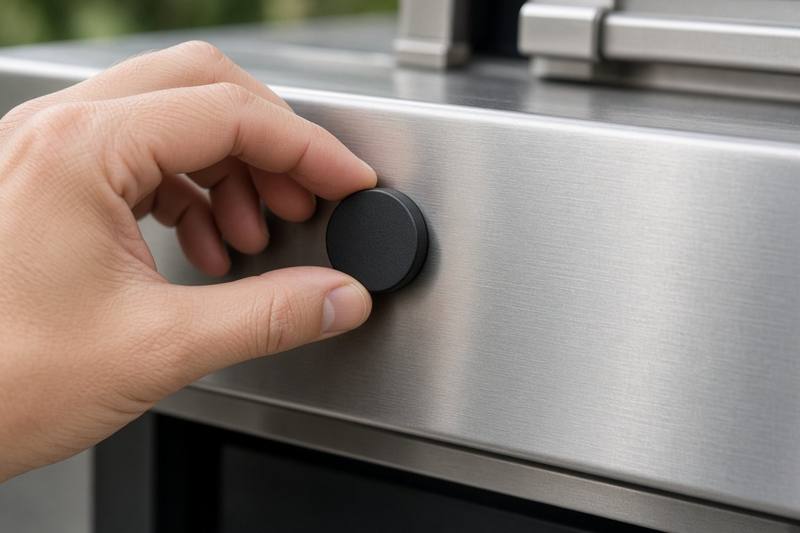
Take a fridge magnet to the store. On 430 it grabs firmly. On 304 it barely holds or slides off, though bent and welded spots can pull a little.
Try the lid, the cookbox and the burners if you can reach them. A grill sold as "stainless" with 430 panels and 304 burners is a fair build; one with 430 everywhere will show rust spots sooner, especially near the coast.
What 304 buys, on our scores
Of the 53 gas grills we have scored, the reviews of 12 name 304 stainless in their build. Here is how they compare with the other 41.
Names 304Other gas grills
The 304 grills are better built (9.2 against 8.6) and score higher for reliability (8.4 against 7.6). They cost far more: a typical one is $5,599, against $599 for the rest, and 11 of the 12 are built-ins, which is why they trail on Value. Much of that gap is the whole grill, not the steel alone.
Cast iron, porcelain or stainless grates?
- Cast iron: heavy bars that store heat and leave the darkest sear marks. Bare cast iron rusts if it is left wet or unoiled; oil it after each cook.
- Porcelain coated: cast iron or steel under a glassy enamel coat. No seasoning, easy to wipe, but a chip from a metal scraper lets rust in under the coating.
- Stainless steel: rods or bars that do not rust and need only a scrape. Thick rods sear nearly as well as cast iron; thin wire grates do not.
Here is how grills with each kind of grate compare, from the reviews that name only one grate material.
Heat PerformanceLong-term Reliability
Grills with stainless grates lead on heat (9.0), and grills with cast iron grates trail on reliability (7.4), which fits a grate that rusts when it is neglected. The stainless grills are also the dearest, typically $1,889 against $429, so part of that lead is the rest of the grill. Our guide to cleaning grill grates covers the care of each.
Our top scorers by grate
Questions people ask
- Is 430 stainless steel safe for cooking?
- Yes. Both 304 and 430 are food safe. 430 is simply more prone to surface rust, so grills use it mostly on panels and trim rather than parts that cook.
- Does 304 stainless rust?
- It resists rust well but can show light brown spots near salt air or under baked on grease. They wipe off with a stainless cleaner. 316 stainless, used on a few coastal grills, resists salt best.
- What is porcelain enamel?
- A layer of glass fused onto steel or cast iron at high heat. It is the glossy coat on most charcoal kettles and many grates. It does not rust, but a chip exposes the metal underneath.
- Are chipped porcelain grates safe?
- A small chip is not a hazard, but rust will spread under the coating from it. Scrape off any loose flakes and plan to replace the grates when the coating lifts.
- Cast iron or stainless grates: which is better?
- For searing, heavy cast iron, if you will oil it. For the least care, thick stainless rods. Both beat thin wire grates.