
Choose a pellet grill if you want to set a temperature and walk away: it runs the fire for you and has more room. Choose a kamado if you want searing heat as well as long smokes, from a cooker that needs no power and lasts. On our scores for 12 kamados and 20 pellet grills, the kamado leads on heat performance, build quality, long-term reliability and maintenance, and the pellet grill on ease of use and value.
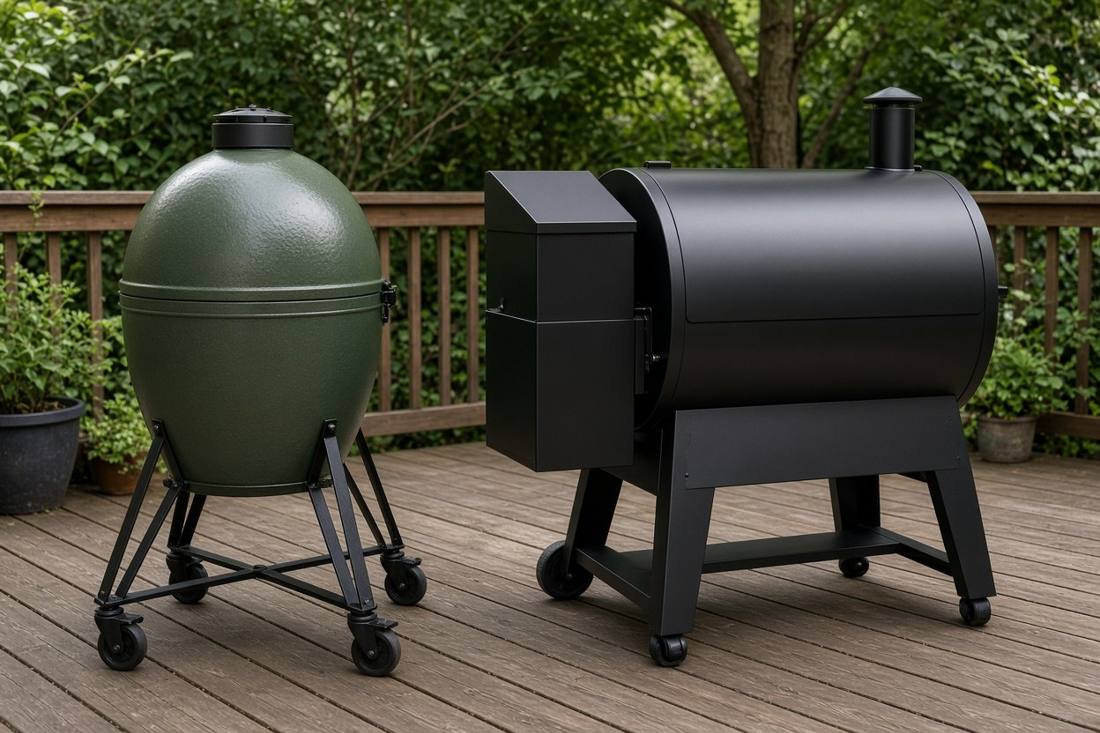
The difference at a glance
| Kamado | Pellet grill | |
|---|---|---|
| Fuel | Lump charcoal, plus wood chunks | Wood pellets |
| Heat control | Two vents, by hand | A dial; a controller holds it |
| Top heat | 700 F and more | About 450 to 500 F on most |
| Needs power | No | Yes, an outlet |
| Typical main grate | 250 sq in | 540 sq in |
| Typical price | $1,399 | $826 |
| Our average score | 8.41 from 12 | 8.00 from 20 |
Where the heat comes from
A kamado stores heat in its thick walls and you steer it with the vents. A pellet grill makes heat on demand, feeding pellets to a small fire as its controller asks.
Kamado
- Thick ceramic walls hold the heat
- Lump charcoal burns in the firebox
- Air in at the bottom vent
- Smoke and heat out at the top vent
Pellet grill
- Hopper of wood pellets
- Auger feeds pellets to the firepot
- A fan feeds the fire; a controller sets the speed
- A steel baffle spreads the heat
How they compare on our scores
Every grill we review is scored on the same six categories. Here is the average for each side.
KamadoPellet grill
The biggest gap is Long-term Reliability: kamados average 8.0 and pellet grills 7.0. A ceramic shell has no motor, fan or circuit board to fail; a pellet grill has all three. Pellet grills lead on Ease of Use (8.7 against 8.3) and on Value.
Searing and grilling
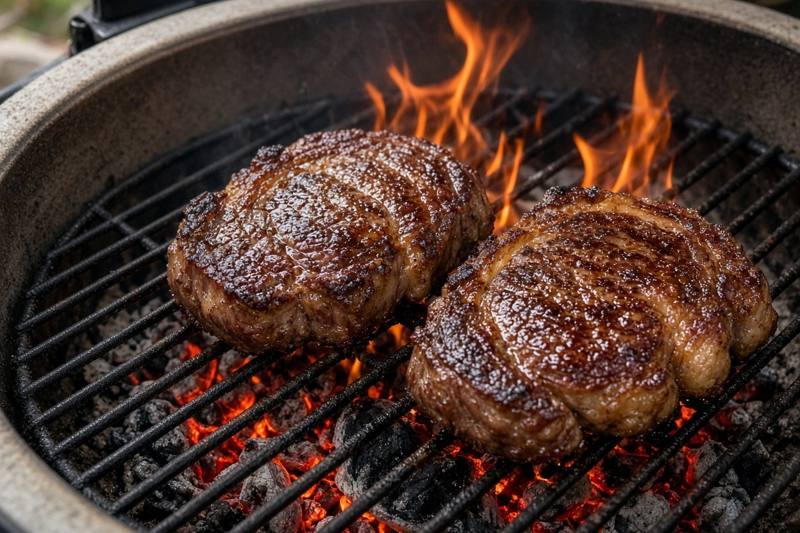
This is where a kamado wins clearly. With both vents open it climbs past 700 F, hot enough for a steakhouse crust or a pizza in a few minutes, and the food sits right over the coals.
Most pellet grills top out around 450 to 500 F and cook with indirect heat under a baffle, so they brown rather than sear. Some add a direct flame zone or a sear plate; check for one if steak matters to you.
Smoking
Both smoke well. A pellet grill is the easier smoker: set 225 F, fill the hopper and check the meat. The smoke is mild, because pellets burn clean. A kamado holds a low fire for many hours on one load of lump once the vents are set, and its moist, closed cook gives a stronger smoke flavor, but it takes practice to settle on a temperature without overshooting. Our guide to using the vents covers the settings.
Which should you buy?
- Buy a pellet grill if you want hands off smoking, cook for a crowd, or would rather not tend a fire. Plan on an outlet nearby and some care for the auger and fan.
- Buy a kamado if you want to sear, bake pizza and smoke on one cooker, cook through cold winters, or want something that lasts for many years without electronics.
- Buy both, in time, if you cook outdoors most weekends. Plenty of owners run a pellet grill for long smokes and a kamado for everything hot.
The best of each we have scored
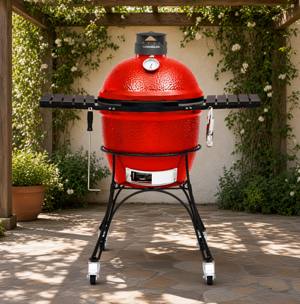
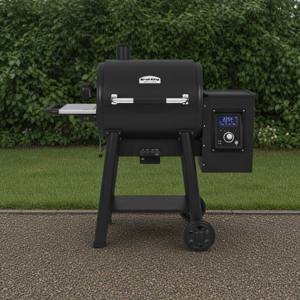
See every pick in our best kamado grills and best pellet grills.
Questions people ask
- Which is better for a beginner?
- A pellet grill. It holds the temperature you set, so a first brisket or pork shoulder comes down to the meat, not the fire.
- Which gives more smoke flavor?
- A kamado, usually, with a few chunks of wood on the lump. Pellet grills give a milder smoke; a pellet tube in the grill adds more.
- Which costs more to run?
- It depends on how you cook. A kamado sips lump charcoal because its walls hold heat; a pellet grill burns roughly 1 to 2 lb of pellets an hour when smoking and more when hot. Both cost more per cook than propane.
- Which works better in cold weather?
- A kamado. The thick walls barely notice the cold, while a steel pellet grill burns far more pellets to hold heat in winter, unless you add an insulated blanket.
- Which lasts longer?
- On our Long-term Reliability scores, the kamado. Our guide to how long grills last has the warranty terms for each.