
After each cook, burn off the grates on high for 10 to 15 minutes and scrape them. A few times a season, deep clean from the top down with the gas off: grates, heat bars, burners, cookbox, then the grease tray and cup, using warm soapy water, a scraper and a soft brush. Empty the grease cup often; it is what catches fire.
After every cook
- Turn every burner to high with the lid closed for 10 to 15 minutes.
- Scrape the grates while hot, with a bristle free brush or a ball of foil in tongs. Our grate cleaning guide covers each material.
- Turn the burners and the propane tank off.
- Once a week of use, check the grease cup and empty it if it is getting full.
The deep clean, top to bottom
Two or three times a season, and before the first cook of spring. Turn off and disconnect the gas, let the grill cool, and work downward so loosened grease falls into the next step.
- Grates
- Heat bars or flame tamers
- Burners
- Cookbox walls and floor
- Grease tray
- Grease cup
- Grates: lift them out and soak them, or scrub them, by material.
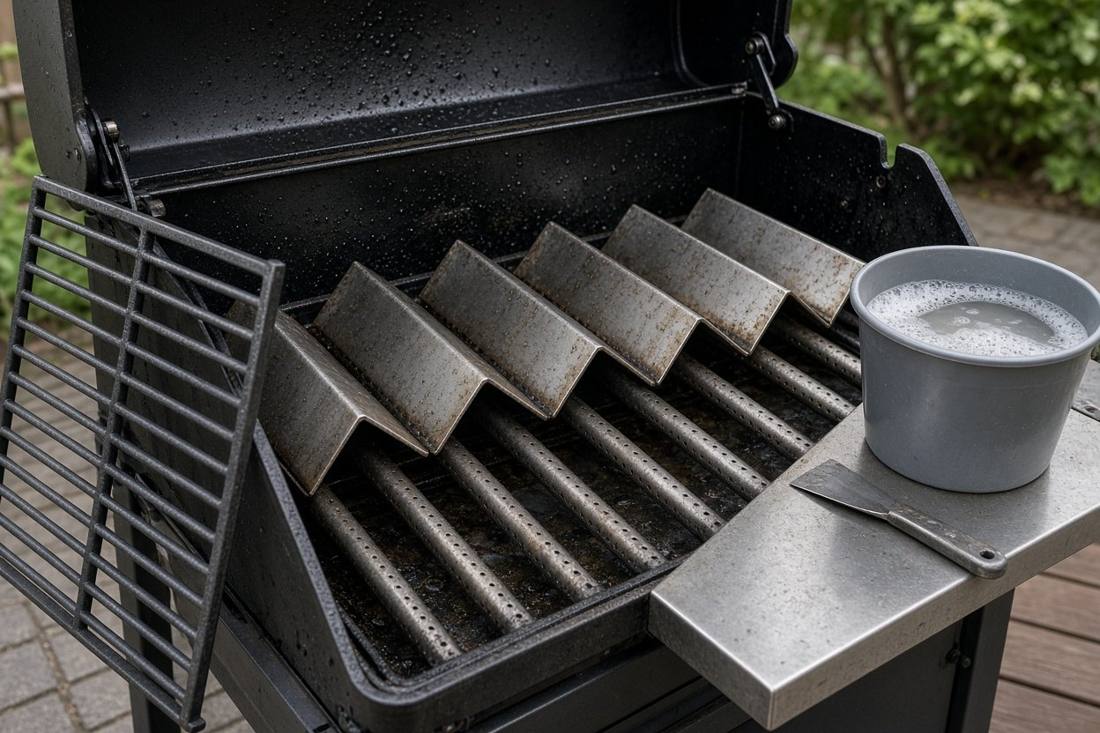
- Heat bars or flame tamers: the metal tents over the burners. Scrape off the crust and wash them in warm soapy water.
- Burners: brush along the length with a soft wire or nylon brush, and clear any blocked port with a toothpick or paper clip. Never enlarge a port.
- Cookbox: scrape the walls and floor down into the grease tray opening with a plastic scraper.
- Grease tray: slide it out, scrape it into the trash, and wash it.
- Grease cup: empty it, wash it or fit a fresh foil liner.
Wipe the outside with warm soapy water, or stainless steel cleaner wiped with the grain on stainless. Then reconnect the gas, light the grill and run it on high for 15 minutes to burn off any soap.
Burners and spiders
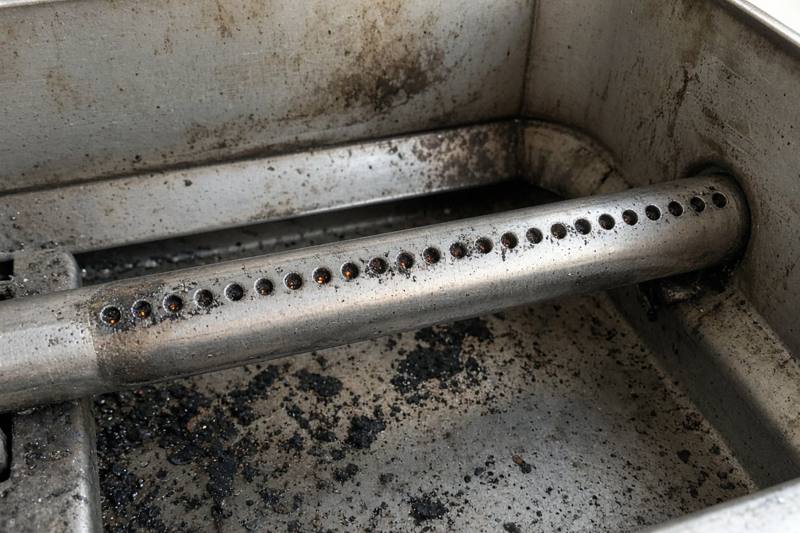
Uneven flames, yellow tips or a burner that will not light usually mean blocked ports. Brush them clear.
Spiders and insects like to nest in the tubes that feed gas to the burners, especially over winter. A blocked tube can push the flame back toward the control knobs. If you smell gas, or see flames near the knobs, turn everything off and clean the tubes with a venturi brush before using the grill again.
While the grill is apart, brush soapy water over the hose and its fittings with the tank open: bubbles mean a leak. Tighten or replace the part before lighting.
Which gas grills are easiest to keep clean?
Here is the average Maintenance score of the 53 gas grills we have scored, by type.
Freestanding carts score lowest (7.5): bigger cookboxes, more burners and more parts to clean, often with cast iron that needs oiling. The top scorers have grease trays that lift straight out, porcelain or stainless that needs no seasoning, and few parts.

Questions people ask
- How often should you deep clean a gas grill?
- Two or three times a grilling season, plus a burn off and scrape after every cook. If you grill several times a week, deep clean every month or two.
- Can I use oven cleaner inside a gas grill?
- Sparingly on bare metal parts like the cookbox interior, rinsed well, but never on the burners, porcelain or painted surfaces. Warm soapy water and a scraper are usually enough.
- Can I pressure wash a gas grill?
- Not the inside. High pressure water gets into the burners, igniter and valves and can cause rust and lighting trouble. Hand wash instead.
- Why are my gas grill flames yellow?
- Usually blocked ports or tubes, or the air shutter set wrong. Clean the burners and tubes; if the flames stay tall and yellow, check the manual for the air shutter adjustment.
- How do I clean a gas grill without a wire brush?
- Use a ball of foil, a wooden scraper or a coil or nylon brush on the grates, and a plastic scraper for the cookbox. Our guide to cleaning grill grates explains why to skip wire bristles.