
Pick the type (a cart, a portable or a built-in) and a size for the most people you feed. Then judge the build: a cookbox that holds heat, heavy grates and burners with a long warranty. Ignore the BTU number on the box; heat for the size of the grate is what counts, and a cart grill should run about 73 to 93 BTU per square inch.
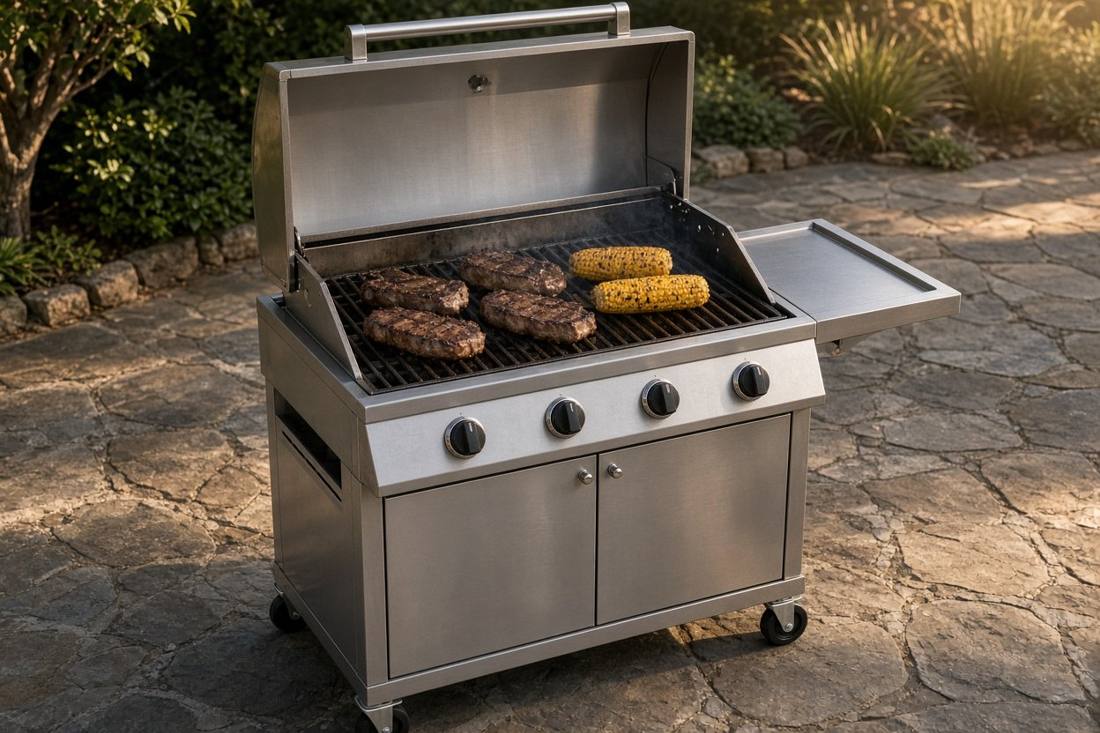
Step 1: cart, portable or built-in?
- A freestanding cart is what most people buy: it rolls, it has shelves, and a propane tank hides in the base.
- A portable folds or sits on a table for camping, tailgates and small balconies, and runs on small propane bottles.
- A built-in drops into an outdoor kitchen counter. It is the heaviest built and costs the most, and it needs the counter around it.
Here is how the three compare on our Build Quality and Value scores, across the 53 gas grills we have scored.
Build QualityValue
Built-ins are the best built of the three (9.2) and the weakest value (7.3): heavy stainless costs money. Portables score 8.2 for value, the best of the three.
Step 2: the size
Look at the main grate, the area right over the burners. Among the grills we have scored, a typical cart has 460 square inches, a typical portable 203 and a typical built-in 630. About 400 to 450 feeds a family of four to six; our guide to choosing a grill draws three sizes to scale.
Count burners too. Two burners grill one way; three or more let you run one side hot and leave one off, which is how you cook a chicken or a roast with the lid down.
Step 3: what is worth paying for
The parts that cook are the parts that wear out. Put the money there, and treat everything else as a bonus.
Worth paying forNice extra
- Lid and cookbox
- Grates
- Flame tamers
- Burners
- Igniter
- Lid thermometer
- Side burner
- Side shelf
- Storage cabinet
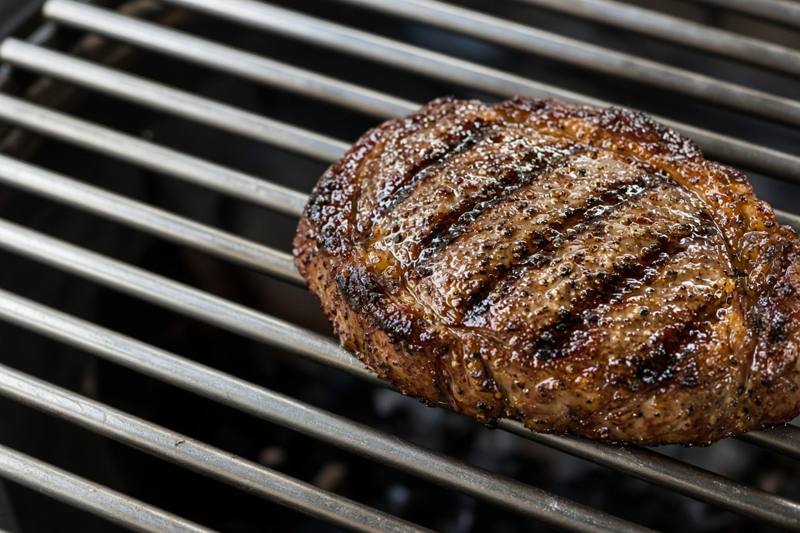
Grates. Heavy cast iron and thick stainless rods both hold heat and leave good marks. Cast iron needs oil to keep rust away; thick stainless needs nothing. Thin wire grates and chipped porcelain coatings are the first thing to go on a cheap grill.
Cookbox and lid. Cast aluminum and thick, double walled stainless hold heat best. If a grill says stainless, hold a magnet to it: the better 304 grade barely attracts a magnet, while cheaper 430 grabs it, and 430 can show rust sooner.
Burners. Look for stainless or cast burners and a warranty of ten years or more on them. A long burner warranty is the maker telling you how long it expects them to last.
Step 4: heat, and the BTU number
The big BTU figure on the box is the total output of every burner, and a bigger grill needs more just to stay even. What matters is heat for the size of the grate. Across the 85 grills we have measured, the middle half of freestanding carts run 73 to 93 BTU per square inch of main grate. Far below that, a grill struggles to brown; far above, it usually has a dedicated sear burner.
Our guide to how many BTUs a gas grill needs has a calculator: enter a grill's BTU and grate size and it shows where it lands.
Step 5: the budget
Here is the average score of the 44 gas grills we have scored that have a current price, in three price bands.
Moving from under $400 to $400 to $1,000 lifts the average from 8.01 to 8.13; $1,000 and up reaches 8.34. The money buys build and heat: Build Quality rises from 8.4 to 9.2 and Heat Performance from 8.0 to 8.9. It does not buy ease: the dearest band scores 7.4 for Ease of Use, because so many of them are built-ins.
Propane or natural gas?
They cook the same. Propane comes in a 20 lb tank you swap or refill, so the grill can go anywhere. Natural gas needs a line run to the grill, but it never runs out mid cook and costs less to burn. Most grills are sold in one version or the other; buy the one that matches your fuel, because converting later needs a kit and sometimes a technician.
The best of each type we have scored

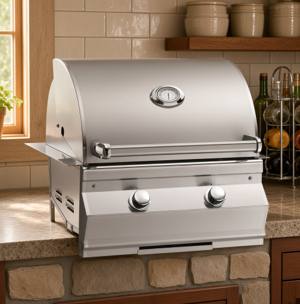
See every pick in our best gas grills, best portable grills and best built-in grills.
Questions people ask
- How many burners do I need?
- Three for most families. Two works for one or two people. Four or more give you room to cook a whole meal at once, or to grill on one side and roast on the other.
- Is a higher BTU better?
- Not by itself. A big grill needs more BTU to heat the same as a small one. Divide the main burner BTU by the main grate area: about 73 to 93 per square inch is normal for a cart grill.
- Is 304 stainless better than 430?
- Yes. 304 has more nickel and resists rust far better, which matters most on the burners and the cookbox. Many grills use 430 on the outside panels to save cost, which is fine there.
- Is a sear burner or infrared burner worth it?
- If you cook a lot of steak, yes: it reaches much higher heat over a small area for a fast crust. For burgers, chicken and vegetables, a well built standard burner is plenty.
- How long does a gas grill last?
- Our guide to how long grills last has the warranty terms and reliability scores by kind. Gas grills carry some of the longest.