Kamado Joe Classic I vs Classic III
Classic I or Classic III: the same 18 inch ceramic and 250 sq in grate, $1,200 apart at list. What the Classic III adds, and who needs it.

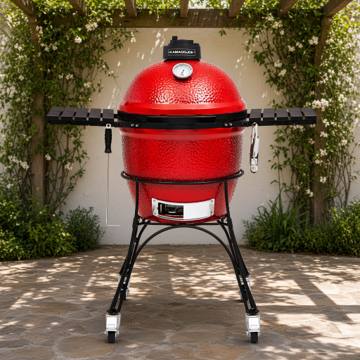
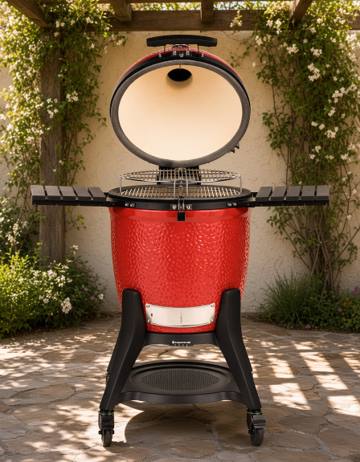
No single winner. Here is how to choose.
This comes down to how you cook, because the fire is the same. Both are 18 inch Kamado Joe ceramic with 250 sq in of grate and a 225 to 750 F range. The Classic III adds everything Kamado Joe has made since: the Air Lift hinge, the Kontrol Tower vent, the fiberglass mesh gasket, the SloRoller insert and a third tier. That is a $1,200 gap at list, $999 against $2,199.99. If you smoke for hours most weekends, the III is the complete version and scores 8.79 to the I's 7.96. If you mostly grill and can lift a ceramic dome, the Classic I cooks the same food for less than half.
What actually differs
-
$1,200 of lid, vent and insert
None of it changes the ceramic or the grate. It changes how easy the grill is to open, how steady it holds a low fire, and how it handles a long smoke.
-
Ease of use, 6.9 against 8.8
The Classic I has no hinge assist and a cast iron cap. The Classic III lifts easily and remembers its vent setting, but weighs 280.6 lbs to the I's 227.7.
-
Value, 7.7 against 6.6
Our reviews score the Classic I as the better value and the Classic III as the weakest of the three, because most of its price goes to features beyond the fire.
How they score, category by category
The Kamado Joe Classic I scores higher in 1 category, the Classic III in 5 categories.
-
Heat Performance
Counts for 25% of the scoreKamado Joe Classic I 8.6Classic III 9.4 Better by 0.8Why the Classic III scores 9.4The Series II's 225 to 750 degree ceramic band, plus a SlōRoller smoke insert that grill lacks. Still one fire, never two zones.
Why the Kamado Joe Classic I scores 8.6
Same ceramic and 225 to 750 F range as the Series II, and the split 2-tier grate runs two zones from one fire.
-
Long-term Reliability
Counts for 20% of the scoreKamado Joe Classic I 7.6Classic III 8.7 Better by 1.1Why the Classic III scores 8.7The registered warranty runs for life on ceramic, yet the two parts that wear soonest, gasket and dome gauge, carry just a two-year term.
Why the Kamado Joe Classic I scores 7.6
Lifetime ceramic cover is strong, but the fiberglass mesh gasket went to Series II and III, and metal parts carry only five years.
-
Build Quality
Counts for 18% of the scoreKamado Joe Classic I 8.3Classic III 9.3 Better by 1.0Why the Classic III scores 9.3Finished aluminum shelves where the Series II fits HDPE, a powder coated steel cart, cast aluminum vent, and stainless grates, latch and basket.
Why the Kamado Joe Classic I scores 8.3
Ceramic shell, cast iron cart, stainless grates and a multi-piece firebox built to resist cracking; plastic HDPE shelves are the soft spot.
-
Ease of Use
Counts for 15% of the scoreKamado Joe Classic I 6.9Classic III 8.8 Better by 1.9Why the Classic III scores 8.8Kontrol Tower and Air Lift make the lid easy, yet 280.6 lbs and three tiers of inserts mean more to lift and stage.
Why the Kamado Joe Classic I scores 6.9
No Air Lift Hinge means lifting a heavy ceramic dome unassisted every cook, and the cast iron cap lacks the Kontrol Tower's repeatable settings.
-
Value
Counts for 12% of the scoreKamado Joe Classic I 7.7 Better by 1.1Classic III 6.6Why the Kamado Joe Classic I scores 7.7Identical food to a $1,499 Series II for $999, yet still four figures for a design whose comforts were moved upmarket.
Why the Classic III scores 6.6
At $2,199.99 it costs $700 over the Series II for an identical fire, and Amazon was asking the same money in October 2026.
-
Maintenance
Counts for 10% of the scoreKamado Joe Classic I 8.4Classic III 9.1 Better by 0.7Why the Classic III scores 9.1A stainless basket sieves reusable charcoal from the ash, on top of the inherited ash drawer. Gasket wear is the one recurring job.
Why the Kamado Joe Classic I scores 8.4
The slide-out ash drawer empties the firebox without unloading the grate stack, a real edge over basic kamados.
See all six scores in one table
| Category | Kamado Joe Classic I | Classic III |
|---|---|---|
| Heat Performance (25%) | 8.6 | 9.4 Better |
| Long-term Reliability (20%) | 7.6 | 8.7 Better |
| Build Quality (18%) | 8.3 | 9.3 Better |
| Ease of Use (15%) | 6.9 | 8.8 Better |
| Value (12%) | 7.7 Better | 6.6 |
| Maintenance (10%) | 8.4 | 9.1 Better |
| Avid Griller Score | 8.0 | 8.8 |
Both reviews are scored on the same six weighted categories, on the same 0 to 10 scale, and each reason is the one that review gave. A category is marked better only where the two differ by a tenth or more. How we score →
Where the spec sheets differ
Quoted from each maker's own specifications, as each review records them. Figures the two products publish identically are left out, so only the differences are listed.
Which one is for you
You want proper ceramic kamado cooking at the lowest Kamado Joe price.
Check price →You smoke often and want every refinement Kamado Joe makes, whatever the cost.
Check price →More head-to-heads
Every score and figure on this page comes from our own reviews of these two products, linked above. We have not tested them side by side in one place; the comparison is between two full reviews, each built from the maker's published specifications and documentation. Prices move, and the ones quoted are the ones each review checked on its own date.