For a smoker review, start here: a charcoal smoker is a fire you cannot see. The lid stays down for hours at a time. Almost everything you learn about the cook arrives through one small dial.
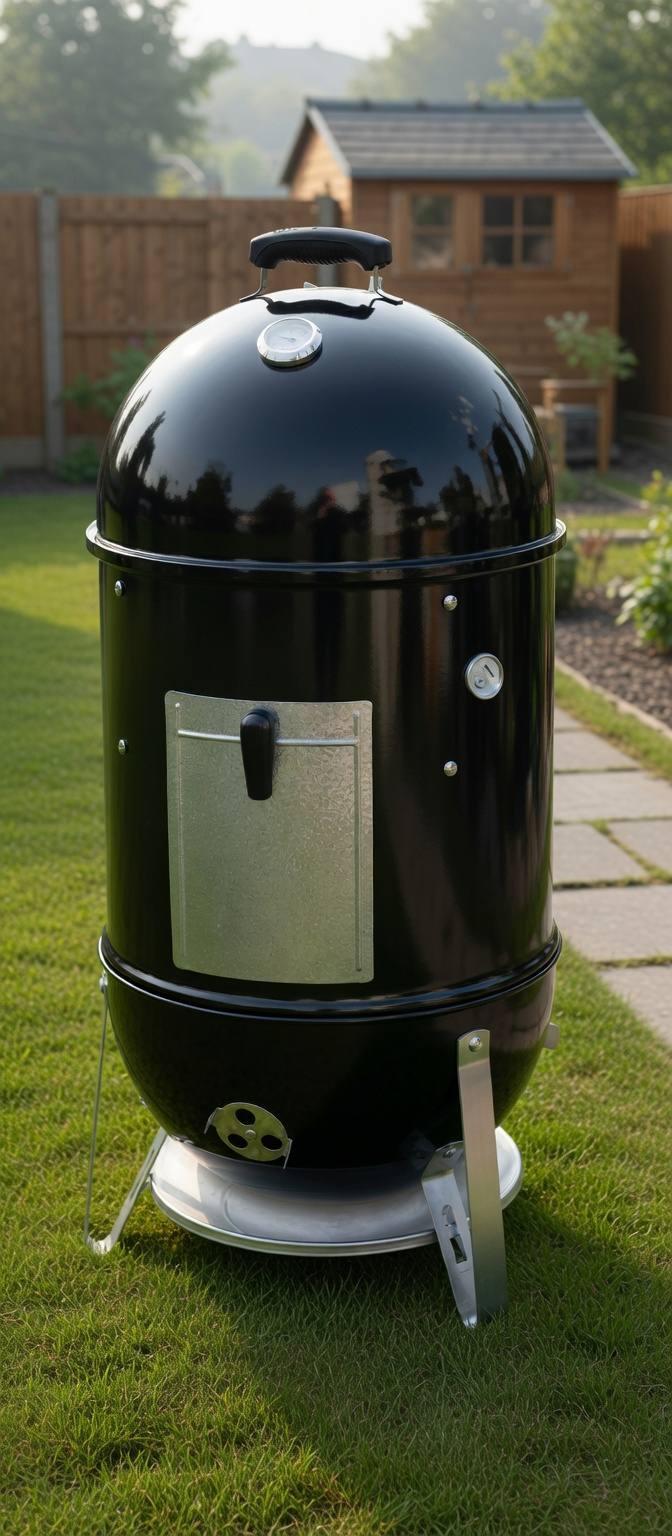
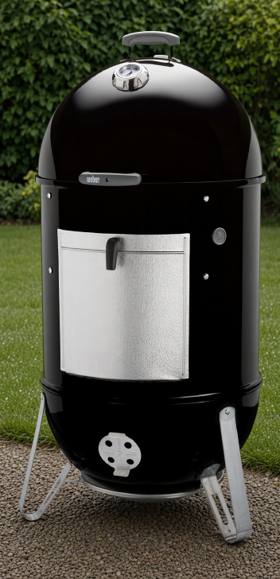
The Smokey Mountain Cooker Smoker 18, model 721001, is the middle size Weber sells. It carries 481 square inches across two grates, on a barrel 18 inches wide.
A bigger barrel holds a bigger fire, and a bigger fire is a steadier one. Weber added the mass. It did not add anything new to watch that mass with.
481 sq inCooking area, across two grates
41 in tallHeight, on a 19 in wide footprint
10 yearsWarranty, bowl lid and center ring
4Dampers, and no other heat control
First Impressions of the Weber Smokey Mountain 18
Out of the box this is less a build than a stack. A bowl takes the legs. A tall center ring drops onto the bowl, and a domed lid caps it.
What the hand registers is the glaze. Porcelain enamel runs over every major surface, the water pan included. It is hard and glassy, closer to a bathtub than to paint. Nothing here ever wants seasoning.
Then the proportions land. Forty-one inches tall, on a footprint 19 inches wide. This is a column, not a barrel on legs. That geometry is how 481 square inches occupies so little ground.
The first cook teaches the format quickly. Light a modest bed of charcoal. Fill the pan, set the dampers, walk away. The hardest part is leaving it alone.
Key Features of the Weber Smokey Mountain 18
Strip this cooker down and remarkably few systems are left. A fire, a pan of water, two racks, four holes. Everything below is one of those.
- Two cooking grates: Two racks share one fire, stacked one above the other. The upper rack heats on air the lower one has already warmed. Capacity here is vertical, which is the trick behind the shape.
- Multiple vents and dampers: Four aluminum dampers meter the burn, three down low and one at the peak. Shut them and the fire suffocates. Nothing else on this cooker adjusts heat.
- Coal door: The aluminum door comes off completely rather than swinging open. Charcoal and wood go in without breaking the stack apart. Mid-cook that is a pause instead of a restart.
- Porcelain-enameled body: Weber’s own claim is that it will not rust, crack or peel. The same finish carries the longest warranty on the cooker. Paint on a cheaper smoker does none of this.
- Water pan: An enameled pan sits in the path between coals and food. It soaks up heat and releases it late, blunting the spikes. Damp air is the other half of what it does.
- Charcoal chamber: A steel ring corrals the coals so they burn as one body. It also keeps falling ash clear of the lower vents. Choked vents are the usual way a charcoal cook goes wrong.
- Built-in lid thermometer: A dial in the lid reports dome heat while everything stays shut. Opening up to look costs heat you then rebuild.
- Silicone grommet: A dedicated pass-through for a probe lead, fitted as standard. Weber built a way in for an instrument it does not supply.
- Cover: One comes in the box, alongside the pan, chamber and thermometer. Nothing essential here is sold separately.
Thermal mass is the currency a charcoal smoker deals in. An 18 inch barrel takes a larger bed of fuel than the 14 inch model does. More burning charcoal means more stored heat, and stored heat resists change.
That buys slack. Cold meat going on, or cold wind across the deck, costs proportionally less. The cooker sags where a smaller one would lurch.
The dampers are the only input, and they are deliberately unhurried. A small adjustment takes tens of minutes to surface. Overcorrecting is the beginner’s mistake here, not reacting too slowly.
The two racks are not equivalent, and that is useful. Heat passes the lower grate before it ever reaches the upper one. Anything wanting gentler treatment belongs on top.
Read the area figures closely and one detail stands out. Primary and total cooking area are the same 481 square inches. No warming rack is skimming heat off the top. Both grates sit in the working part of the cooker.
That is also why a same-width kettle is the wrong comparison. A kettle spreads a single grate across the fire. This stacks two of them above it instead. Similar ground taken, roughly double the room.
What the extra size does not buy is more information. There is one built-in reading and it is taken at the lid. The fire got bigger and the instrument did not.
Build, handling and durability
Weber’s warranty is the most candid spec sheet on this cooker. The bowl, lid and center ring get 10 years against rust through. Plastic gets 5 years. Everything else gets 2.
Read that as a statement about materials. Weber stands behind the enameled chamber five times longer than the hardware bolted to it. That is the part expected to outlive the rest.
The grates are the visible economy. Plated steel, not the cast iron that Weber puts on its kettles. Searing is not this cooker’s job, so the saving barely shows.
One handle is the only glass-reinforced nylon on the specification. Everywhere else Weber chose metal or enamel. On a cooker left outdoors for years, that ratio is the point.
Height is the thing you actually handle. Reaching the coals means lifting a hot center ring clear, if the door will not do. Forty-one narrow inches also catch wind. Choose where it stands before you light it.
Running costs, upkeep and value
Fuel is the cheap part of owning this. A bag of charcoal per cook, no cord and no hopper. What it truly costs is a day you meant to spend outside anyway.
The gap in the paperwork is capacity. Weber never states what the chamber holds, or how long a load runs. Those are the two numbers a buyer most wants. Expect to learn both by cooking.
Cleaning is light work. Enamel takes a damp cloth where bare steel would take a brush. Ash stays off the vents, which protects the only control you have. The pan is the job that recurs, and it recurs every cook.
Weber’s page showed $419.00 when this was written in August 2026. At that figure each of the 481 square inches costs about 87 cents.
The cover ships in the box, so nothing else is needed before the first cook. Smoker prices move with the season. Check Weber and the big retailers before deciding what this costs today.
Assembly help exists and is probably unnecessary. Weber offers a fixed $99 booking through Angi on qualifying grills. Three sections and a bag of bolts rarely justify it.
Possible Weber Smokey Mountain 18 Complaints
- One reading, and it is taken in the wrong place: The built-in thermometer sits up in the lid. Dome heat and grate heat are not the same number. Weber fitting a grommet for someone else’s probe is the company quietly agreeing. Budget for a second thermometer.
- Nobody publishes what the chamber holds: There is no figure for fuel capacity, and none for hours per load. On a cooker built around long cooks, that is the number buyers most want. You will learn it by cooking, not by reading.