A smoker has one job. It has to hold a low temperature for hours. It should not ask much of the person standing beside it. Everything else in this smoker review is detail.
Weber’s Smokey Mountain Cooker Smoker 14 is the smallest way the company sells that job. The model number is 711001. It keeps the whole system. Porcelain enamel, a water pan, a charcoal chamber, four dampers, a thermometer.
Nothing was removed to reach the size. The barrel simply got smaller. So the question is what small costs on a cooker whose only purpose is staying still.
First Impressions of the Weber Smokey Mountain 14
Assembly is short and needs no tools beyond patience. Three sections stack: a bowl at the bottom, a centre ring, a lid. The legs bolt to the bowl and the whole thing stands up in minutes.
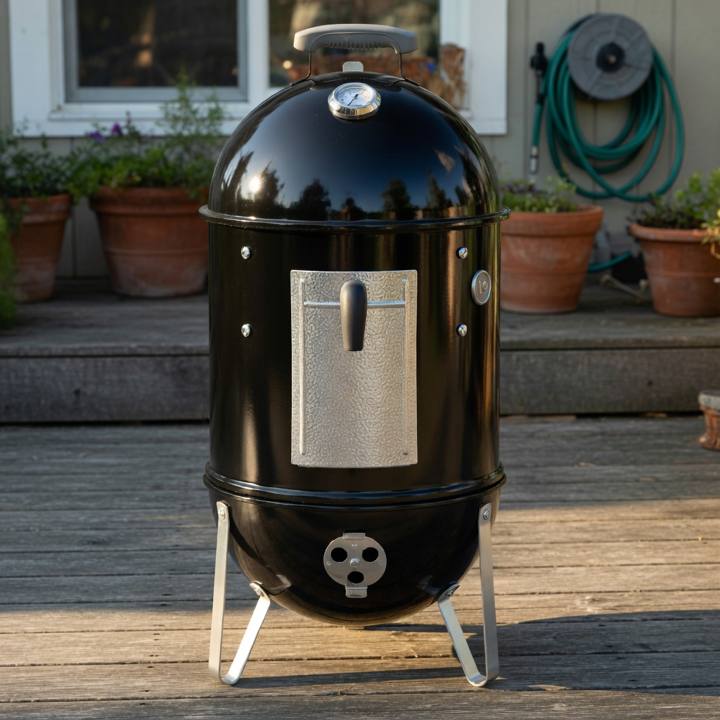
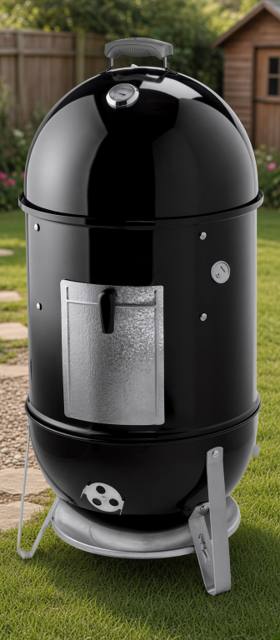
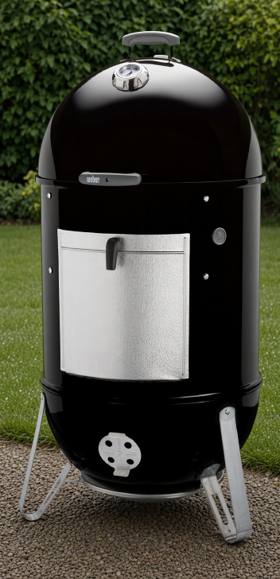
What you notice first is the finish. Porcelain enamel covers the bowl, the lid, the centre section and the water pan. It is glassy rather than painted. The cooker feels like equipment, not like a box of folded steel.
Then comes the shape, which is the point. The barrel is a chimney with a fire at the bottom and food in the middle. Heat rises past a water pan and through the lower grate. It passes the upper grate and leaves by the top damper.
The first cook explains the design faster than any specification does. A small fire, four vents to set, and a lid you leave alone. Smoke tastes different from grilling because time replaces heat. This cooker is built around that trade.
Key Features of the Weber Smokey Mountain 14
Most of what matters on a smoker is airflow, mass and the ability to add fuel. This one is built around those three, and very little else.
- Two cooking grates: Both sit over the same fire, one above the other. Capacity is bought upward rather than by heating a larger space. That is the single most useful thing about the design.
- Four aluminium dampers: Three at the bottom set the burn rate, one at the top vents. Closing the bottom vents cuts oxygen and puts the fire out. Airflow is the only temperature control a charcoal smoker has.
- Porcelain-enamelled body: The bowl, lid, centre section and water pan all carry it. Nothing needs seasoning and nothing rusts if you leave it out. Enamel also holds heat rather than shedding it.
- Water pan: It sits between the fire and the food. Water absorbs heat and gives it back slowly, which steadies the temperature. It also puts moisture into a long cook.
- Charcoal chamber: A ring that holds the fuel together so it burns as one bed. It also stops ash dropping into the bottom dampers. Blocked vents are how a charcoal cook loses control.
- Removable fuel door: The whole door lifts away to add charcoal or wood. On a small barrel this is structural rather than convenient. There is not much fuel in there to begin with.
- Built-in lid thermometer: Dome temperature is readable without opening anything. Every lift of the lid costs heat and time.
- Cover included: Weber puts one in the box. That is unusual enough at this price to be worth naming.
The cooker holds temperature well for its size. The reason is the pan rather than the metal. Water changes temperature slowly.
A small fire under a pan of water behaves like a much larger one. The fuel load suggests otherwise.
The dampers do the rest. Three bottom vents give fine control over the burn rate. Small changes take a while to show.
The real skill here is patience. A smoker responds in tens of minutes, not in seconds.
Where the 14 inch barrel shows itself is in reserve. A smaller fire has less thermal mass. Wind, or a cold piece of meat, moves it further. It recovers, but it needs the cook to notice sooner than a larger barrel would.
The two-grate layout is what makes the size work. The upper rack costs nothing to heat. It sits in air the fire already warms. Capacity on this cooker is a question of stacking, not of building a bigger fire.
That changes how you plan a cook. Two racks of ribs use one fire and one bed of charcoal. The cost of the second rack is the space it takes, not the fuel it burns.
Build, handling and durability
The materials are the argument for buying this rather than a cheaper barrel. Porcelain-enamelled steel does not rust through, does not need oiling and does not care about rain. Weber backs the bowl, lid and centre ring for ten years against rust and burn through.
That warranty is worth reading as a materials statement. Ten years on the enamelled sections, five on plastic components, two on everything else. The company is putting its longest cover on the parts that would fail first.
The compromises are visible and honest. The grates are plated steel, not the cast iron Weber uses on its kettles. They will not hold heat the same way. On a smoker that matters less, because grate searing is not what this cooker is for.
Handling is easy in a way the larger sizes are not. It measures 14.7 inches across and 31.4 inches tall with the lid on. One person moves it, and it stores in a corner rather than needing a bay.
Stability is worth a word. The legs are short and the barrel is narrow. On a windy balcony that matters more than on a wide kettle.
Running costs, upkeep and value
Charcoal is the cheapest fuel to cook with and the most expensive in attention. There is no gas line and no pellet hopper. The running cost is a bag of fuel and a few hours.
Attention is the real running cost. Charcoal asks for checks that gas and pellets do not. Anyone moving from a gas grill should expect that shift. The chamber is small, which is why the removable door matters.
Upkeep is genuinely light. Enamel wipes down rather than needing a wire brush. The charcoal chamber keeps ash off the bottom vents.
The water pan is the one standing chore. It needs emptying and cleaning after every cook.
Price is the part that has moved. Weber’s own listing shows $289.00 today. This site captured around $219 at Amazon and Walmart in July 2026.
Buy on the lower figure if you can find it. The higher one changes the comparison.
At the street price the case is straightforward. A cover, a water pan and a charcoal chamber are all included. So is a decade of rust cover. Very little else in this space includes the cover at all.
Possible Weber Smokey Mountain 14 Complaints
- The fuel chamber is small, and the cook pays for it: A 14 inch barrel holds a modest bed of charcoal. Long cooks mean adding fuel partway through, which is exactly why the door lifts off. Plan the refuel rather than discovering it.
- Capacity is fixed and it is not large: 286 square inches sounds generous until it is split across two round grates. A brisket and a shoulder together are not happening. Buyers who regularly cook for a crowd want the 18 or the 22.