Of four Original Kettle sizes, the 18 inch is the one buyers argue themselves out of. Its price tag at Weber reads $129.00 for part 441001. The 22 inch version, part 741001, lists at $149.00.
So the question is plain. A $20 saving costs you 123 square inches of grate. Put another way, roughly a third of the 22 never comes home with you. What does the smaller bowl give back for it?
The short answer is size, in every sense. Whether that size suits the way you cook is what this grill review asks. It also marks where it stops suiting it.
240 sq inThe whole grate, with no rack above it
36 inHeight with the lid on, against 39.5 in for the 22
$20Derived: the gap to the 22 inch kettle at Weber's own prices
5 inLid height, Weber's figure for the room above the grate
First Impressions of the Weber Original Kettle 18
The carton is close to a cube, 20.4 inches on two sides and 14.6 tall. Boxed, Weber puts it at 24.3 lb. That fits on the back seat of most cars. One adult can carry it to the patio without help.
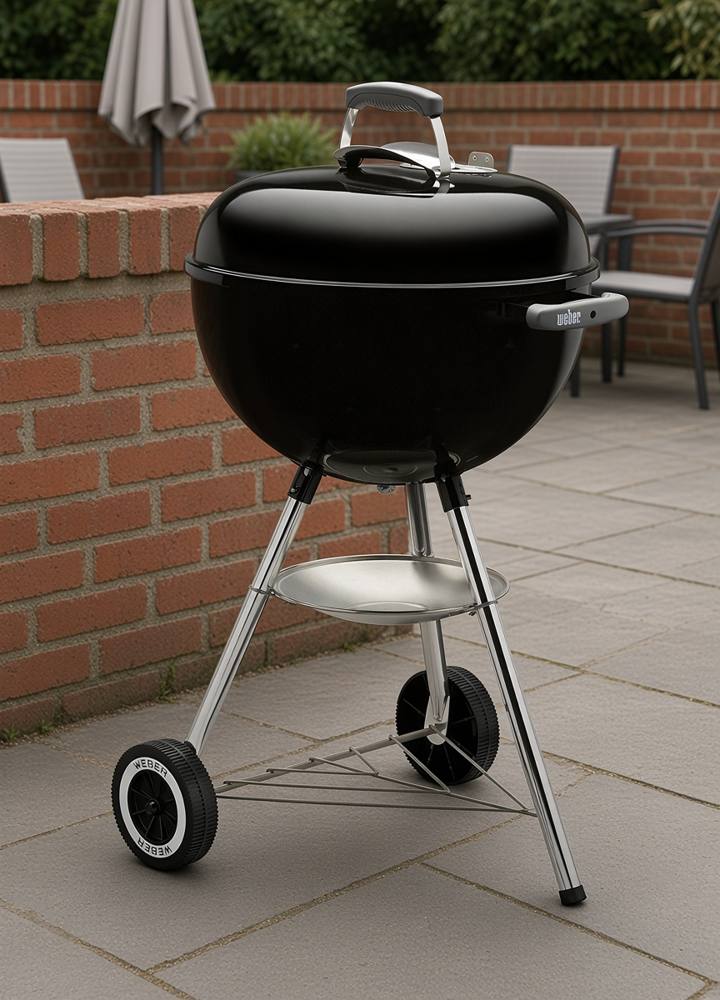
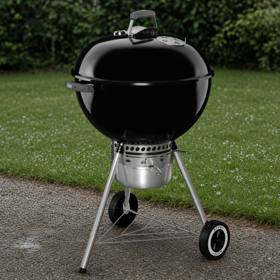
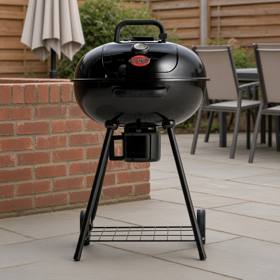
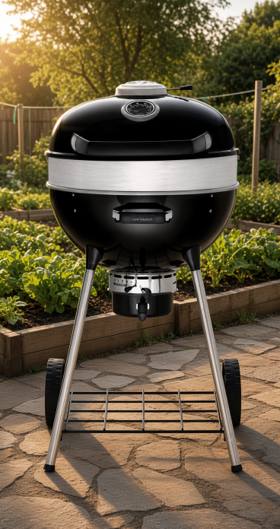
Assembly is short and mostly about the stand. The bowl takes three legs, two of them on wheels, braced by a wire triangle.
Weber calls that wire a storage shelf. In every photograph it looks more like a leg brace. It will hold a bag of charcoal, and not much else.
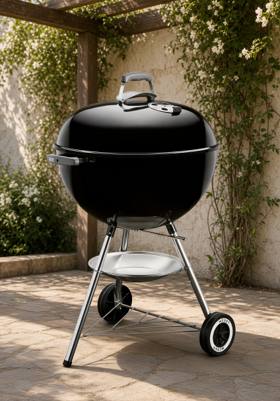
Standing upright, the kettle is shorter than you expect. It rises 36 inches with the lid on, so the lid handle sits near hip height. The black enamel is glossy and even. Grey nylon grips cap the dome and the bowl’s rim.
Your first fire follows the familiar kettle ritual. Chimney of coals, both vents open, lid on, wait. Burgers over the full bed take a quick crust and that clean charcoal smell. Cooked ones shuffle to the edge while the next round goes in the middle.
Key Features of the Weber Original Kettle 18
The 18 shares its design with every Original Kettle Weber makes. The parts are simple, and each one does a single job. What changes from size to size is how much food each part has to serve.
- Porcelain-enameled bowl and lid. Weber bakes enamel onto the steel shell. It resists scratches and rust, and it carries the longest part of the warranty.
- Multiple vents or dampers. The bottom vent feeds the coals and the lid vent lets smoke out. Open both and the fire climbs; close them and it starves. They are the only throttle.
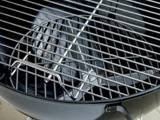
- Plated-steel cooking grate. A wire grate over a separate fuel grate. Light to lift, quick to clean, cheap to replace when it eventually wears.
- One-Touch cleaning system. A lever under the bowl turns small blades that sweep ash down through the vents. It lands in the shallow catcher hanging below.
- Lid hook. Slot the lid onto the side of the bowl and it hangs there. On a small grill with no side table, that hook is the lid’s only resting place.
- Two tool hooks on the bowl handle. Tongs and a spatula hang within reach.
- Three aluminium legs and two all-weather wheels. Aluminium does not rust through, which matters on a cooker that lives outdoors.
- Glass-reinforced nylon handles. Both stay cool enough to grab without a mitt during a normal cook.
There is no thermometer in Weber’s specification list. There is also no side table, and no cover comes in the box. Those absences define this tier, and they are the same on the 22.
Kettle heat comes from airflow, and the 18 behaves like any Weber bowl here. Open the dampers wide and a full chimney of briquettes sears hard. Pinch the lower vent and the coals calm down for chicken or sausages. The lid vent fine-tunes it from above.
The size question shows up the moment you try two-zone cooking. Bank the coals to one side and the 240 square inches split in two. One half is hot and the other is cool. Each half holds a couple of steaks or a few chicken thighs.
That is enough for two people. It is tight for six, whatever the 4 to 6 rating says. Weber’s own count of 9 burgers assumes one flat layer with coals underneath all of it.
Small bowls also react faster to the dampers. Less air volume means a nudge to the bottom vent shows up sooner. Fiddlers will like that. Forgetful cooks will overshoot.
Lid height is the other limit. Weber gives the dome 5 inches of clearance above the grate. Flat food never notices. A whole chicken laid flat fits, but an upright bird may brush the enamel.
Build, handling and durability
The parts that matter most are the parts Weber did not cheapen. Enamel coats both halves of the shell, and Weber backs them for 10 years. Rust usually kills a kettle from the outside in. The shell is the right place for the long cover.
The savings sit lower down. Plating on a steel wire grate wears thin and flakes in time. The wire leg brace is thin.
How thick that steel runs goes unstated. The photographs and the price are your only guide.
Moving it is easy. Tip the kettle onto its two wheels and roll it across a patio slab. On grass, the third leg drags, so you lift and carry instead. At this size that is a one-person job.
The small touches hold up their end. The lid hook means the hot lid never goes on the deck boards. Hang the tongs on the handle and they stay out of the grass.
Weber has not reinvented anything for this size. The 18 is built from the same parts list as the bigger kettles, only smaller. You give up grate, not quality, and the warranty treats it the same way.
Running costs, upkeep and value
Running costs are where the small bowl earns something back. A smaller fire space needs a smaller pile of coals to heat it. How many briquettes it takes is not on Weber’s page. Even so, a half chimney goes further in an 18 than in a 22.
Upkeep is light. Sweep the ash with the One-Touch lever, then empty the catcher once it fills. A damp cloth over warm enamel clears the grease film.
The grate costs little to replace when it finally flakes. Weber covers small parts for 2 years and the One-Touch hardware for 5.
Value is the weak point, and the cause is its own sibling. The 22 inch kettle lists at $149.00 for 363 square inches. Paying $20 more buys half again as much grate.
Amazon had the 18 at around $126.99 on 14 October 2026. The gap barely moves there either.
If the money is tight, the 18 is still honest enamel and real dampers. If $20 is not the deciding factor, the bigger bowl gives more for each dollar. The 18 only wins on value if you never need the extra grate.
Possible Weber Original Kettle 18 Complaints
- Two-zone cooking gets crowded. The cause is the 240 square inch grate split in half. You feel it with guests, when the cool side fills fast. The fix is cooking in rounds, or buying the 22.
- No way to read the fire. Weber lists no thermometer. Beginners may struggle to hold a steady low heat. A cheap probe thermometer through the vent solves most of it.