First Impressions of the Gozney Arc
The Arc arrives in one piece. There is nothing to bolt together, which is rare at this price. Fit the flue outlet and the burner guard. Connect the supplied hose and regulator, and it is ready.
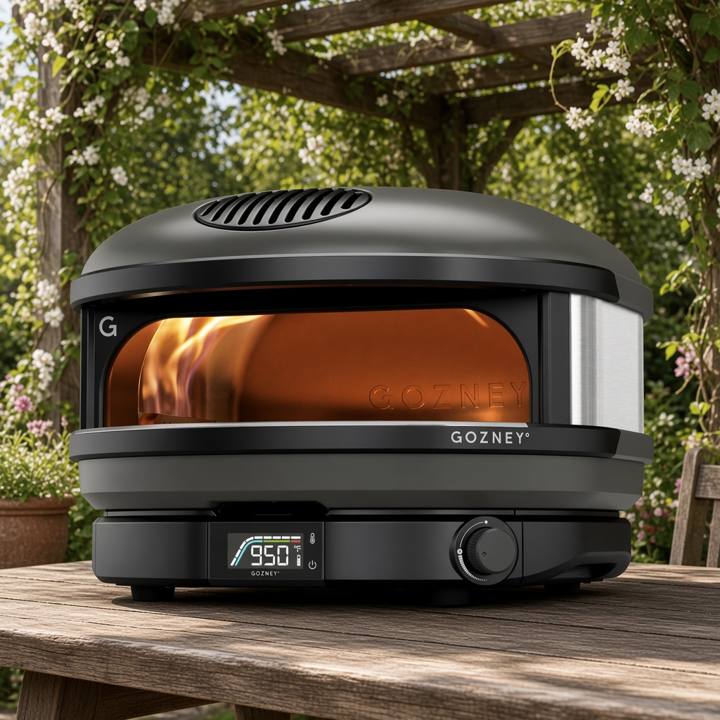
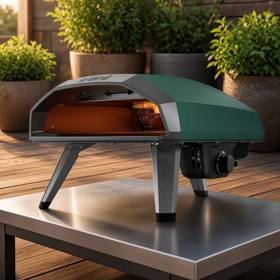
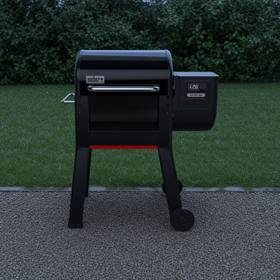
The Arc is heavier than it looks. Moving 47.5 lb from box to table is a lift nobody repeats lightly. Nobody will mistake it for a picnic oven. The rounded lid, matte body and brushed steel flank make it look like a kitchen appliance.
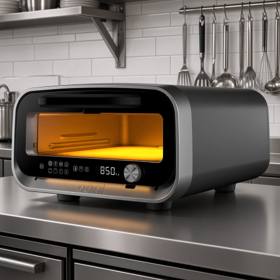
Once lit, your eye goes straight to the flame. It climbs the left wall and curls over the roof, much like a small wood oven. Below the mouth, a digital readout climbs and marks zones for each style of pizza.
Our first pies came out with a blistered, leopard-spotted rim and a dry, crisp base. Crust facing the burner wall darkened ahead of the rest, so each pie wanted a turn. The crumb inside was open and light. Tomato and mozzarella cooked through without the cheese turning greasy.
Key Features of the Gozney Arc
Almost everything that sets the Arc apart serves one goal: a small box that stays hot. Here is what it brings, in the order a cook will notice it.
- Lateral rolling flame: A single burner runs along one side of the chamber. Its flame rolls up the wall and across the dome, browning toppings from above.
- Cordierite floor: The stone is a removable slab, 20 mm thick. It charges slowly and then keeps feeding heat into the base.
- Two-layer insulation: Gozney packs the body with dense insulation in two layers. That mass is most of the weight you lift.
- Digital temperature gauge: A screen on the base shows the reading and highlights pizza zones. You know when it is ready without an infrared gun.
- Control dial: One front dial sets the flame. Turned down, it suits bread, roasted vegetables or a cast iron pan.
- Stainless steel: The side panel is brushed stainless. It shrugs off spatter better than painted steel would.
- A wide, low mouth: The opening is 14.8 inches across but only 3.74 inches high. Heat stays in, and you launch through a slot.
- Cover: Gozney sells an Arc Cover and a cover that also wraps the stand. Neither comes in the box.
The box also holds a stone adjustment tool, a Torx screwdriver and a matchstick holder. A burner guard and the flue outlet complete the kit.
Gozney rates the Arc to 950 F. With the dial wide open, our oven climbed into the hottest zone on its readout. Then it held there. Holding is the part the Arc does best.
The low door is the reason. Each launch lets out very little heat, and the thick stone carries the rest. Across a run of pizzas, the floor came back quickly between pies. Bases from the last pie of the night matched the first.
Gozney claims a 14 inch pizza in 60 seconds or less. That held for thin Neapolitan dough on a fully soaked stone. New York style pies baked better with the dial lower and a slower bake.
The cost is the turn. A flame on one side browns that side first. Every pie gets rotated at least once. Through a 3.74 inch slot, that takes a small turning peel and a few practice pies.
Give the stone longer than the air reading suggests. Gozney promises working heat within minutes, but the floor lags the dome. A rushed start gives a pale, soft base under a charred top. Patience at the start pays off for the whole evening.
One gap matters more than it seems. On the US spec sheet, the line for BTUs is simply absent.
It prints the mouth height and the packed weight. The figure a gas buyer compares first is missing. The bakes do not suffer for it, but you cannot rank the Arc on paper.
Build, handling and durability
The shell has real mass, and nearly all of it is insulation. Seams close evenly and the lid line is clean. The brushed stainless panel should age better than bare painted steel.
Handling is where that mass shows. There are no legs to fold and no carry bag.
So the Arc wants a fixed home. Gozney offers the Arc Stand and the Arc Booster, or a sturdy outdoor table works. Gozney is clear that it is not for indoor use.
The warranty is generous with a catch. Left unregistered, the oven carries twelve months of cover.
Send Gozney its details inside 60 days and the term becomes five years. That longer term is strong for a pizza oven. It only applies to owners who fill in the form.
Running costs, upkeep and value
Fuel is ordinary propane through the supplied 1.2 m hose. Gozney does not publish gas use, so cost per pie stays unknown. The insulation helps, though. Once the stone is soaked, most bakes run happily below full flame.
Upkeep is light. Flour and stray cheese burn off on a hot stone. A dry brush clears the ash once it cools. After a greasy session, wipe the stainless panel with a damp cloth.
Never wash the stone with soap, since cordierite drinks it in. A stained floor is normal and does no harm. The dome needs only a glance for soot around the flue now and then.
Better still, the stone is meant to come out. Gozney supplies a tool to adjust and lift it. A cracked slab becomes a part swap, not a write-off. The Torx screwdriver in the box hints that the shell is built to be serviced too.
Value is the weakest point. Around $799.99 buys one 14 inch pie at a time, with stand and cover extra. The Arc XL costs $999.99 and adds 75.5 sq in of floor. That $200 also buys 16 inch pies.
Where you buy matters as well. The Amazon listing ships free but is marked non-returnable unless damaged or defective. Gozney sells it direct at the same price. That may be the safer route for a first oven.
Possible Gozney Arc Complaints
- The low mouth punishes a sloppy launch. A pie that snags on the lip folds over on itself. New pizza makers should practice with a thinner dough and a well-floured peel. A dedicated turning peel makes the mid-bake rotation far easier.
- The long warranty needs paperwork. The five year term hinges on a form sent within 60 days. Owners who miss it keep only one year. Register before the first bake.