Weber Searwood XL 600 vs Weber Smoque
972 sq in and a 600 ceiling against 594 sq in and 500, for around $400 less. Whether Weber's searing pellet grill beats its dedicated smoker.
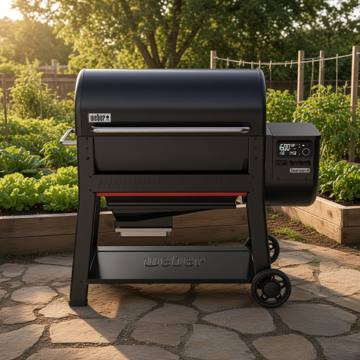
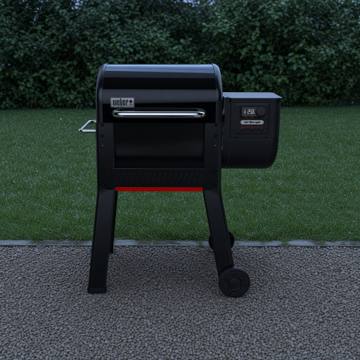
It depends — and here is on what
Buy on whether you want one cooker to sear as well as smoke. The Searwood XL 600 spans 180 to 600 with no large sheet diffuser, across 972 sq in over two grates, for $1,199. The Smoque stops at a published 500, holds it with a PID controller, and gives 594 sq in of which only 385 is primary grate — for around $799. Both ship with two probes, app control and a fuel gauge, so neither needs a first-day purchase.
What actually differs
-
600 against 500, and what that is for
The extra hundred degrees is the whole reason the Searwood exists. If your cooking is brisket, pork and ribs, you will never ask for it; if you want one machine that also finishes a steak, the Smoque has no answer.
-
385 sq in of real grate against 630
Read the primary figures, not the totals. The Smoque counts 209 sq in of warming rack in its 594, and the Searwood 342 in its 972. The usable gap is wider than the headline gap.
-
Both carry an unresolved spec
Weber prints the Searwood grates as cast-iron on the badge and plated steel in the table — one page, two materials. The Smoque is plated steel throughout and does not pretend otherwise.
The scorecard, side by side
Both reviews are scored on the same six weighted categories, each bar on the same 0–10 scale, and every cell carries the reason that review gave. A row is marked won only where the two differ by a tenth or more. How we score →
A 180 to 600 span with no large sheet diffuser is unusual reach for an auger-fed cooker.
A PID controller and fast recovery serve low and slow well, but Weber publishes a 500 ceiling and no sear story.
Weber covers the cook box for five years, and everything that burns or fails for three.
The cook box carries 5 years while the burn pot, pellet slide, heat baffle, grates and electronics carry 3.
157.80 pounds, a porcelain-enameled lid and stainless Flavorizer bars, but the grate metal is printed two ways.
102 pounds of enameled steel cabinet feels settled, though the grates are plated steel rather than cast iron.
A fuel gauge that alerts you at low pellets, two probes, Wi-Fi and Bluetooth, all included.
Two probes, two ports, an LCD controller and app control ship in the box with nothing else to buy.
$1,199 buys probes and connectivity, but the cover is $94.99 and the front table another $99.99.
Around $799 buys probes and connectivity outright, but the bottom shelf and the cover are both charged as extras.
Grease and ash pull out together from the front, rather than from under a loaded cabinet.
The enclosed grease and ash system is aimed squarely at the chore that puts people off pellet cookers.
Published figures that differ
Quoted from each maker's own specifications, as each review records them. Figures the two products publish identically are left out — only the differences are listed.
Which one is for you
You want one pellet cooker that smokes low and still reaches searing heat.
Check price →You smoke, and would rather put the $400 somewhere else — the Smoque holds a set temperature just as well.
Check price →More head-to-heads
Every score and figure on this page comes from our own reviews of these two products, linked above. We have not tested them side by side in one place; the comparison is between two full reviews, each built from the maker's published specifications and documentation. Prices move, and the ones quoted are the ones each review checked on its own date.