Weber Genesis E-435 vs Weber Spirit E-425
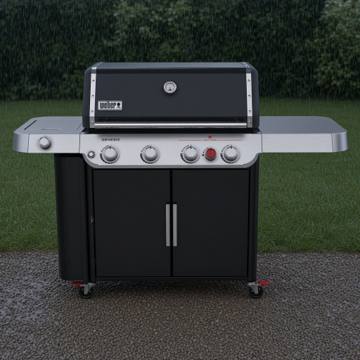
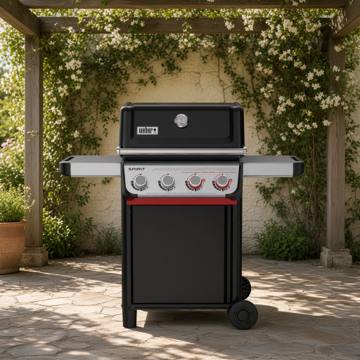
The Genesis E-435 brings 646 sq in, a sear burner and a side burner. The Spirit E-425 does four burners on 428 sq in for far less. Which four-burner Weber.
We pick the Weber Spirit E-425 Gas Grill
Most people should buy the Spirit E-425; the Genesis E-435 earns its money only if you cook for a crowd. The Genesis fires 48,000 BTU across four main burners plus a 12,000 BTU sear zone burner and a 12,000 BTU side burner, over 646 sq in of primary grate and 994 sq in all told, at 93 BTU per square inch. The Spirit puts 35,000 BTU over 428 sq in at 82 BTU per square inch for $629 — and takes 51.80 inches of patio against the Genesis cart's 68.5.
What actually differs
-
218 more square inches of primary grate
646 against 428. If you are regularly cooking for eight or more, that is the figure that decides it, and no amount of burner management on the Spirit replaces it.
-
Sear and side burners, against two Boost Burners
The Genesis is the only grill in Weber's live twelve-model Genesis range pairing a sear burner with a side burner. The Spirit reaches its second heat by pushing two of four knobs past high — which works, and uses burners that are already cooking.
-
Nearly 17 inches of extra cart
68.5 inches needs real patio width and a path to get it there. Our review marks the Genesis down on value precisely because $300 of its price adds no primary grate over the cheaper E-415.
The scorecard, side by side
Both reviews are scored on the same six weighted categories, each bar on the same 0–10 scale, and every cell carries the reason that review gave. A row is marked won only where the two differ by a tenth or more. How we score →
Only grill in Weber's live 12-model Genesis range pairing a 12,000 BTU sear burner with a 12,000 BTU side burner.
Same two Boost Burners the E-325 gets, now asked to serve 68 more square inches of primary grate.
Twelve years on the cookbox, but only two on the paint covering it, labor excluded and cover ending at resale.
Four burner tubes carry ten years here, but paint and everything unlisted still fall off cover at two.
Porcelain-enameled cast iron grates, stainless Flavorizer bars and burners, four casters of which two lock.
Cast iron, stainless bars and a closed cabinet, holding 103 pounds steady across a 51.80 inch frame.
Front-facing fuel gauge and a six-hook storage locker, against a 68.5 inch cart that needs real patio width.
Four Snap-Jet knobs light one at a time, so the red pair sets a sear side in seconds.
Three hundred dollars over the E-415 adds no primary grate area and no extra main burner output.
Stepping from $499.00 to $629.00 adds a burner and grate, but not a third Boost Burner.
Two-stage grease path is quick to empty, but it ends in a foil pan you keep rebuying.
The grease tray slides clear in one motion, yet 428 square inches of enamel all have to stay unchipped.
Heat density
Burner output over the surface it has to heat, derived in each review from that cooker's own published figures. A bigger number is not a better grill — it says how hard the cooker can drive its grate, nothing more. All grills ranked →
Published figures that differ
Quoted from each maker's own specifications, as each review records them. Figures the two products publish identically are left out — only the differences are listed.
Which one is for you
You cook for eight or more, want dedicated sear and side burners, and have the width.
Check price →You want four burners and a sear side for $629, in a cart that fits a normal patio.
Check price →More head-to-heads
Every score and figure on this page comes from our own reviews of these two products, linked above. We have not tested them side by side in one place; the comparison is between two full reviews, each built from the maker's published specifications and documentation. Prices move, and the ones quoted are the ones each review checked on its own date.