Weber Genesis E-415 vs E-435
Same 646 sq in grate, same 48,000 BTU mains. The E-435 adds a 12,000 BTU sear burner, a 12,000 BTU side burner and a 348 sq in top grate for $300 more.
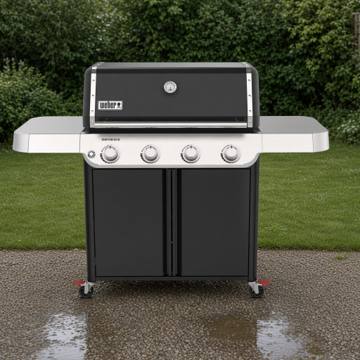
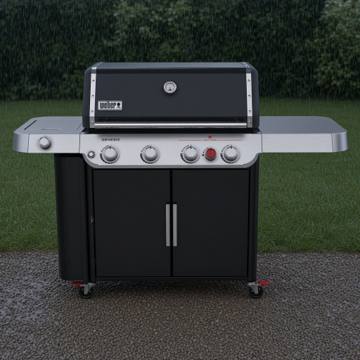
We pick the Weber Genesis E-415 Gas Grill
Take the E-415 unless you will use both of the E-435's extra burners. Both cook on 646 sq in from 48,000 BTU across four stainless tubes. For $1,499 against $1,199, the E-435 adds a 12,000 BTU Sear Zone burner, which lifts heat density from 74 to 93 BTU per square inch, plus a 12,000 BTU side burner. Our reviews land them at 8.51 and 8.5: what the E-435 gains in heat it gives back in value.
What actually differs
-
A hot end without shutting burners off
On the E-415, a searing zone means turning tubes down and losing their share of grate. The E-435 drives one end harder from a fifth burner on a red knob, while the other four stay where you set them.
-
The upper grate doubles; the one you cook on does not
The E-435's top grate is 348 sq in of hinged stainless against the E-415's 174 sq in rack. It holds finished pieces while the sear end keeps going. Everything below it is the same 646 sq in.
-
Four more inches, and a tank that hangs
The E-435 cart is 68.5 inches wide against 64.50. Its cylinder hangs from a cradle to feed a front-facing fuel gauge, so a swap is a lift. Its grease path ends in a foil pan you keep buying.
The scorecard, side by side
Both reviews are scored on the same six weighted categories, each bar on the same 0–10 scale, and every cell carries the reason that review gave. A row is marked won only where the two differ by a tenth or more. How we score →
One even 48,000 BTU field over 646 square inches, with no burner on it built to run hotter than its neighbours.
Only grill in Weber's live 12-model Genesis range pairing a 12,000 BTU sear burner with a 12,000 BTU side burner.
Twelve years on cookbox and lid, ten on all four tubes and the grates, five on the rest, two on paint.
Twelve years on the cookbox, but only two on the paint covering it, labor excluded and cover ending at resale.
Enamelled lid and cast iron grates riding 175 pounds of closed cart, with painted steel rather than stainless on the doors.
Porcelain-enameled cast iron grates, stainless Flavorizer bars and burners, four casters of which two lock.
Four knobs and six hooks are easy; 175 pounds, 64.50 inches of patio and a self-build job are not.
Front-facing fuel gauge and a six-hook storage locker, against a 68.5 inch cart that needs real patio width.
Cheapest of the five four-burner Genesis grills Weber lists, and the four above it share its grate and its 48,000 BTU.
Three hundred dollars over the E-415 adds no primary grate area and no extra main burner output.
Enamel on the grates and on the lid is a wear surface, and the painted doors carry only two years.
Two-stage grease path is quick to empty, but it ends in a foil pan you keep rebuying.
Heat density
Burner output over the surface it has to heat, derived in each review from that cooker's own published figures. A bigger number is not a better grill — it says how hard the cooker can drive its grate, nothing more. All grills ranked →
Published figures that differ
Quoted from each maker's own specifications, as each review records them. Figures the two products publish identically are left out — only the differences are listed.
Which one is for you
You grill on the main surface, cook sides indoors, and can plan a hot zone with the knobs.
Check price →You sear steaks for a crowd and want sauces and corn on a burner beside the grate.
Check price →More head-to-heads
Every score and figure on this page comes from our own reviews of these two products, linked above. We have not tested them side by side in one place; the comparison is between two full reviews, each built from the maker's published specifications and documentation. Prices move, and the ones quoted are the ones each review checked on its own date.