Weber Genesis E-415 vs Spirit E-425
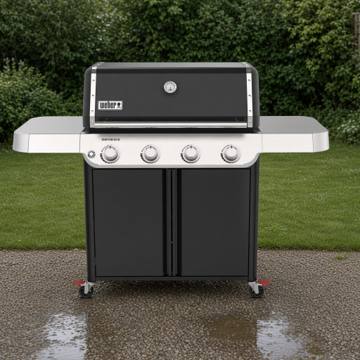
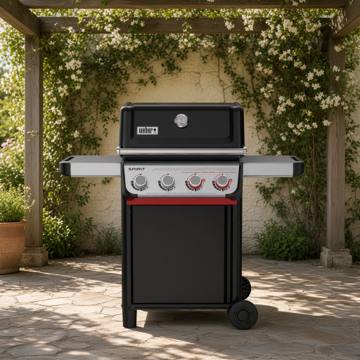
Both run four burners. The Genesis E-415 puts 48,000 BTU over 646 sq in for $1,199; the Spirit E-425 puts 35,000 over 428 sq in, with a Sear Zone, for $629.
It depends — and here is on what
Decide on how many people you feed in one loading. If you routinely cook for a crowd at once — Weber counts 28 burgers on the E-415's grate — buy the Genesis. If not, the Spirit is the better buy at $570 less. The Genesis spreads 48,000 BTU over 646 sq in at 74 BTU per square inch, with no sear burner. The Spirit runs 82 per square inch over 428 sq in and adds a Sear Zone the E-415 has no version of.
What actually differs
-
The sear side is the Spirit's real advantage
Two Boost Burners give the Spirit a searing side out of the box. Weber lists no sear burner for the E-415, so steaks for a crowd take planning. The Spirit is also the denser fire, at 82 BTU per square inch against 74.
-
One loading against cooking in rounds
The E-415 is built to take a whole party's burgers in one go. The Spirit is built for rounds: sear on the red pair, hold on the other two, park overflow on the 105 sq in rack. Your weekends already follow one of those patterns.
-
72 pounds and 12.70 inches
The Genesis is 175 pounds on four casters and needs 64.50 inches of patio, lid up or down. The Spirit is 103 pounds in 51.80. Measure the space before deciding you need the grate.
The scorecard, side by side
Both reviews are scored on the same six weighted categories, each bar on the same 0–10 scale, and every cell carries the reason that review gave. A row is marked won only where the two differ by a tenth or more. How we score →
One even 48,000 BTU field over 646 square inches, with no burner on it built to run hotter than its neighbours.
Same two Boost Burners the E-325 gets, now asked to serve 68 more square inches of primary grate.
Twelve years on cookbox and lid, ten on all four tubes and the grates, five on the rest, two on paint.
Four burner tubes carry ten years here, but paint and everything unlisted still fall off cover at two.
Enamelled lid and cast iron grates riding 175 pounds of closed cart, with painted steel rather than stainless on the doors.
Cast iron, stainless bars and a closed cabinet, holding 103 pounds steady across a 51.80 inch frame.
Four knobs and six hooks are easy; 175 pounds, 64.50 inches of patio and a self-build job are not.
Four Snap-Jet knobs light one at a time, so the red pair sets a sear side in seconds.
Cheapest of the five four-burner Genesis grills Weber lists, and the four above it share its grate and its 48,000 BTU.
Stepping from $549.00 to $629.00 adds a burner and grate, but not a third Boost Burner.
Enamel on the grates and on the lid is a wear surface, and the painted doors carry only two years.
The grease tray slides clear in one motion, yet 428 square inches of enamel all have to stay unchipped.
Heat density
Burner output over the surface it has to heat, derived in each review from that cooker's own published figures. A bigger number is not a better grill — it says how hard the cooker can drive its grate, nothing more. All grills ranked →
Published figures that differ
Quoted from each maker's own specifications, as each review records them. Figures the two products publish identically are left out — only the differences are listed.
Which one is for you
You feed a crowd in one loading most weekends and have 64.50 inches of patio to give it.
Check price →You cook for a family, want a sear side built in, and would rather keep the $570.
Check price →More head-to-heads
Every score and figure on this page comes from our own reviews of these two products, linked above. We have not tested them side by side in one place; the comparison is between two full reviews, each built from the maker's published specifications and documentation. Prices move, and the ones quoted are the ones each review checked on its own date.