Traeger Woodridge vs Weber Smoque XL
$899.99 for 860 sq in against $899.00 for 918, with 520 against 595 on the main grate. Both stop at 500. Traeger's base Woodridge against Weber's Smoque XL.
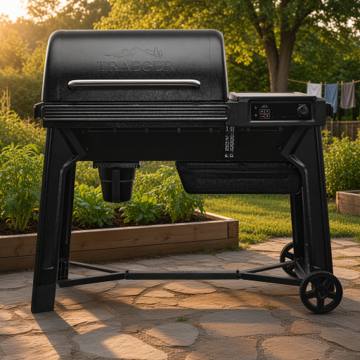
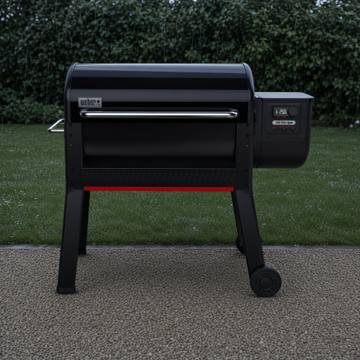
We pick the Weber Smoque XL Pellet Smoker
At effectively the same price, the Smoque XL is more smoker. It puts 595 sq in on the main grate to the Woodridge's 520, ships two probes against one, and adds a SmokeBoost setting the base Woodridge has no equivalent for. Both publish a 500 maximum and no minimum, and both gather grease and ash into a single container. The Woodridge's case is paperwork: a 24 lb hopper Traeger actually publishes, and ten years on sheet metal against rust-through.
What actually differs
-
75 more square inches where the meat goes
The totals are 860 and 918, only 58 apart. The main grates are 520 and 595. Both put a second rack above the main one, so plan a big cook against the lower figure, and the Weber's is larger.
-
A smoke setting against a smoke instruction
The Woodridge has no smoke mode; Traeger tells you to cook between 165 and 225 for more smoke. The Weber has SmokeBoost, but publishes no temperature for it. One gives you a number, the other a button.
-
Two probes against one
The Smoque XL ships both probes. The Woodridge has one wired probe in the box, so watching two joints at once means buying a second.
-
What only Traeger publishes
A 24 lb hopper with a clean-out door, and an RTD sensor named outright. Weber gives no hopper capacity at all. Neither publishes a burn rate, so both leave refill timing to you.
The scorecard, side by side
Both reviews are scored on the same six weighted categories, each bar on the same 0–10 scale, and every cell carries the reason that review gave. A row is marked won only where the two differ by a tenth or more. How we score →
An RTD sensor and a 500 F ceiling serve patient cooking, but Super Smoke Mode is reserved for the Pro.
A Rapid React PID holds a set temperature well, but 500 is the published ceiling and no sear story exists.
The headline ten years protects sheet metal from rusting through, and nothing else on the grill is covered past three.
Three years covers the burn pot, pellet slide, baffle, grates and electrics. Only the box gets five.
138 lbs reads as settled, but Traeger names no grate or body material and prints no size anywhere.
110 pounds on two all-weather wheels, though the grates are plated steel and no body material is published.
A full-color display, WiFIRE control and a wired probe in the box, with nothing else to buy before the first cook.
Both meat probes, the LCD controller and Wi-Fi arrive in the carton, so a first cook needs no extra purchase.
$899.99 buys 860 sq in, but the ten years guards against rust and the smoke feature still costs $1,149.99.
Reduced from $999.00 to $899.00 for 918 square inches, with probes and app control already included.
The grease and ash keg, hopper clean-out and staging hooks each answer a chore owners actually resent.
Grease and ash are enclosed, and Weber says no shop vacuum is needed for either.
Published figures that differ
Quoted from each maker's own specifications, as each review records them. Figures the two products publish identically are left out — only the differences are listed.
Which one is for you
You want a published hopper size, the RTD and ten years of rust-through cover, and will cook low by number.
Check price →You want the bigger main grate, two probes and a smoke setting for the same money.
Check price →More head-to-heads
Every score and figure on this page comes from our own reviews of these two products, linked above. We have not tested them side by side in one place; the comparison is between two full reviews, each built from the maker's published specifications and documentation. Prices move, and the ones quoted are the ones each review checked on its own date.