Traeger Woodridge Pro vs Woodridge
$1,149.99 for the Woodridge Pro against $899.99 for the base Woodridge. Super Smoke, Keep Warm, a pellet sensor, 110 more sq in and two load-rated shelves.
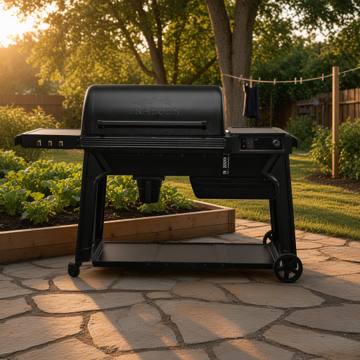
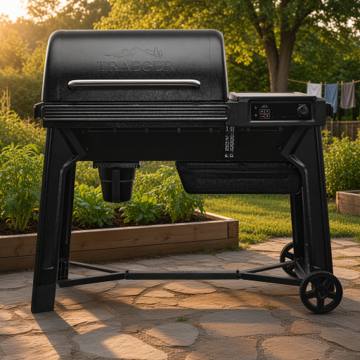
We pick the Traeger Woodridge Pro
Take the Pro if you smoke at all; no other step on the Woodridge ladder buys this much. The $250 adds Super Smoke and Keep Warm buttons, a pellet sensor reading in 5% steps, 110 sq in and two load-rated shelves. Both grills share the 500 F ceiling, the 24 lb hopper and ten years against rust-through. The exception is a cook who runs hot. Super Smoke will not engage above 225 F, and up there the Pro is the base grill with more room.
What actually differs
-
Two buttons and a sensor
The base controller has no Super Smoke and no Keep Warm button; the Pro has both, plus a hopper level with app alerts. The base grill makes its smoke by being set between 165 and 225 F, which works and asks for patience.
-
110 sq in, spread over both racks
585 and 385 against 520 and 340: the lower rack grows by 65, the upper by 45. Traeger rates the Pro at eight pork butts to the base grill's six.
-
Most of the 36 lbs is furniture
174 lbs against 138, and the difference is a folding side shelf rated at 50 lb, a 60 lb bottom shelf and casters. The base grill is tipped onto two wheels and pushed; the Pro steers.
The scorecard, side by side
Both reviews are scored on the same six weighted categories, each bar on the same 0–10 scale, and every cell carries the reason that review gave. A row is marked won only where the two differ by a tenth or more. How we score →
Super Smoke and a two-rack 970 sq in barrel, though the published ceiling stops at 500 F and there is no sear station.
An RTD sensor and a 500 F ceiling serve patient cooking, but Super Smoke Mode is reserved for the Pro.
Ten years covers rust-through only; the controller, auger and fan carry three years, and the hot rod and cord one.
The headline ten years protects sheet metal from rusting through, and nothing else on the grill is covered past three.
Load-rated shelves, casters and staging hooks at 174 lbs, but Traeger publishes nothing at all about the steel.
138 lbs reads as settled, but Traeger names no grate or body material and prints no size anywhere.
WiFIRE control, a pellet sensor reporting in 5% steps with app alerts, and one-touch Super Smoke and Keep Warm.
A full-color display, WiFIRE control and a wired probe in the box, with nothing else to buy before the first cook.
$250 over the base Woodridge buys the flavor feature, two shelves and 110 sq in; the next step buys a cabinet.
$899.99 buys 860 sq in, but the ten years guards against rust and the smoke feature still costs $1,149.99.
Grease and ash share a single keg, but the manual still asks for a firepot vacuum after about 20 hours of cooking.
The grease and ash keg, hopper clean-out and staging hooks each answer a chore owners actually resent.
Published figures that differ
Quoted from each maker's own specifications, as each review records them. Figures the two products publish identically are left out — only the differences are listed.
Which one is for you
You cook brisket, butts and ribs under 225 F and want the button, the sensor and the shelves.
Check price →You mostly grill hot — burgers, thighs, pizza — and would rather spend $250 on pellets.
Check price →More head-to-heads
Every score and figure on this page comes from our own reviews of these two products, linked above. We have not tested them side by side in one place; the comparison is between two full reviews, each built from the maker's published specifications and documentation. Prices move, and the ones quoted are the ones each review checked on its own date.