Weber Spirit E-325 vs EX-325
Identical fire: 31,000 BTU, two Boost Burners, 360 sq in primary, 86 BTU per sq in. The EX-325 adds a Wi-Fi thermometer and one wired probe for $50.
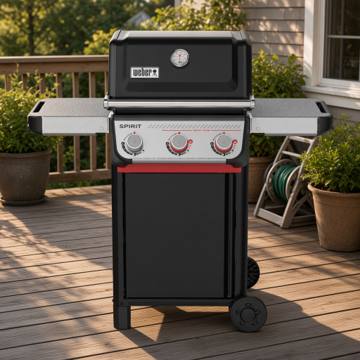
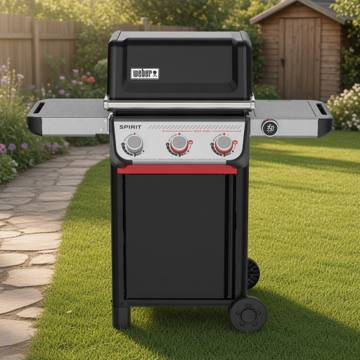
We pick the Weber Spirit EX-325 Smart Gas Grill
Pay the $50 for the EX-325 if you ever cook something that takes hours. The two print the same cooking figures: 31,000 BTU across three burners, two of them Boost Burners feeding a Sear Zone, over 360 sq in of primary grate. The EX-325 adds a Wi-Fi thermometer, a panel readout and one wired food probe, reporting to Weber Connect. It does not cook any hotter. If you already own a probe thermometer you trust, the E-325 is the same grill.
What actually differs
-
The difference is instruments, not fire
Same burners, same grates, same Flavorizer bars. The EX-325 tells your phone when the grill is preheated and when to flip. On a steak you stand over, that adds nothing; on a pork shoulder it is the point.
-
One probe, one piece of food
A single wired probe ships in the box, and Weber publishes nothing about adding a second. Chicken thighs beside a brisket means one of them goes unwatched.
-
The part you pay extra for has the shortest cover
Both grills put ten years on the cookbox, lid and burner tubes. The radio, readout and probe sit in the two-year bucket, and the app needs iOS 12.1 or Android 7.0 or later.
The scorecard, side by side
Both reviews are scored on the same six weighted categories, each bar on the same 0–10 scale, and every cell carries the reason that review gave. A row is marked won only where the two differ by a tenth or more. How we score →
Two Boost Burners give one grate two real working heats, at close to 86 BTU per square inch over the primary grate.
Two Boost Burners give the Sear Zone 40% more power, over cast-iron grates and stainless Flavorizer bars, on 31,000 BTU.
Ten years on the cookbox, lid and burner tubes, but only two on everything remaining, paint included.
Ten years on the metal is class-leading, but the radio, display and probe fall in the two-year bucket with everything else.
Porcelain-enameled cast iron, stainless Flavorizer bars and a closed cabinet, at 98 pounds on two wheels.
Cast-aluminum cook box, stainless Flavorizer bars and porcelain-enameled cast iron, though Weber's own pages disagree about what the grill weighs.
Snap-Jet lights each burner one-handed, which is exactly how a two-heat cook gets set up.
Nothing else near this price lights each burner one-handed and then reports grill and food temps to a phone.
Around $549.00 buys the same Sear Zone and cast iron as the EX-325 for $50 less, though Weber Works accessories cost extra.
The connected layer costs $50 over the E-325 and buys one wired probe; the plain grill cooks identically for less.
The grease tray slides out and empties fast, but chipped enamel on cast iron rusts.
Removable grease tray helps, yet cast iron wants oiling and there is now a probe, a display and cells to mind.
Published figures that differ
Quoted from each maker's own specifications, as each review records them. Figures the two products publish identically are left out — only the differences are listed.
Which one is for you
You grill fast, stand beside it the whole time, or already own a thermometer.
Check price →You roast and slow-cook, and keep getting called indoors halfway through.
Check price →More head-to-heads
Every score and figure on this page comes from our own reviews of these two products, linked above. We have not tested them side by side in one place; the comparison is between two full reviews, each built from the maker's published specifications and documentation. Prices move, and the ones quoted are the ones each review checked on its own date.