Weber Genesis E-325 vs Spirit E-325
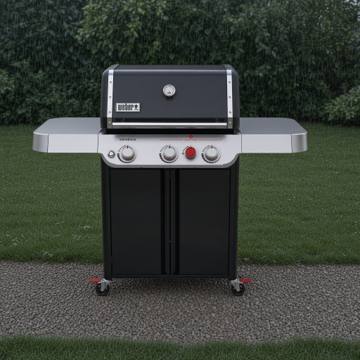
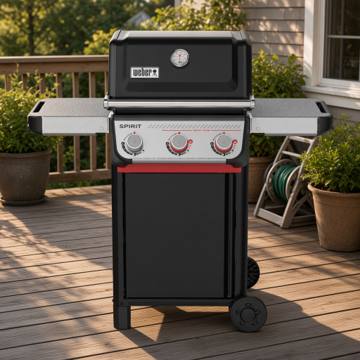
Same model number, two different grills. The Genesis brings 513 sq in and a dedicated sear burner; the Spirit does it on 360 sq in for about $300 less.
It depends — and here is on what
These share a number and almost nothing else, and the decision is budget rather than better. The Genesis E-325 fires 39,000 BTU across three burners plus a dedicated 13,000 BTU sear zone burner over 513 sq in — 101 BTU per square inch — on a 162-pound cart with twelve years on the cookbox, near $849. The Spirit E-325 reaches 86 BTU per square inch from 31,000 BTU over 360 sq in, using two Boost Burners rather than a separate sear burner, at 98 pounds with ten years on the cookbox, around $549.
What actually differs
-
153 square inches and a real sear burner
The Genesis grate is 513 sq in against 360, and its sear heat comes from a fourth burner on its own knob. The Spirit gets there by pushing two of its three main burners past high, which works but takes the same burners the rest of the food is cooking over.
-
Twelve years against ten, and two against ten below that
Genesis covers the cookbox and lid for twelve years and the parts in the fire for ten. The Spirit gives the cookbox, lid and burner tubes ten years and everything else two, paint included.
-
$300 and 64 pounds
The Spirit is 98 pounds on two wheels in a 46-inch frame; the Genesis is 162 pounds of cart. On a small balcony that is the deciding figure, not the grate.
The scorecard, side by side
Both reviews are scored on the same six weighted categories, each bar on the same 0–10 scale, and every cell carries the reason that review gave. A row is marked won only where the two differ by a tenth or more. How we score →
A 13,000 BTU sear burner on its own knob, which the otherwise identical E-315 spec table does not carry.
Two Boost Burners give one grate two real working heats, at close to 86 BTU per square inch over the primary grate.
Twelve years on the shell and ten in the flame, though the paperwork now starts from a delisted model.
Ten years on the cookbox, lid and burner tubes, but only two on everything remaining, paint included.
Porcelain-enamelled lid over cast iron grates and stainless bars, let down slightly by painted steel cabinet doors.
Porcelain-enameled cast iron, stainless Flavorizer bars and a closed cabinet, at 98 pounds on two wheels.
Four knobs and one AA battery are easy; 162 pounds of home assembly and a vanished manual page are not.
Snap-Jet lights each burner one-handed, which is exactly how a two-heat cook gets set up.
Near $849 with a sear burner, while Weber lists the sear-less E-315 at $949 and no propane Genesis under $999.
Around $549.00 buys the rails, while the Weber Works accessories that make them useful are all charged separately.
The grease tray pulls straight out, but cast iron grates and a fourth burner add to every clean-down.
The grease tray slides out and empties fast, but chipped enamel on cast iron rusts.
Published figures that differ
Quoted from each maker's own specifications, as each review records them. Figures the two products publish identically are left out — only the differences are listed.
Which one is for you
You cook for more than four, want searing heat from dedicated hardware, and have the patio width.
Check price →You want two working heats on one grate for around $549, and 360 sq in is enough.
Check price →More head-to-heads
Every score and figure on this page comes from our own reviews of these two products, linked above. We have not tested them side by side in one place; the comparison is between two full reviews, each built from the maker's published specifications and documentation. Prices move, and the ones quoted are the ones each review checked on its own date.