Napoleon Rogue 425 vs Napoleon Rogue PRO 425
Both fire 42,000 BTU into the same 425 sq in grate. The PRO 425 adds a 14,000 BTU infrared side burner and a lined lid for $297 more. Which Rogue to buy.

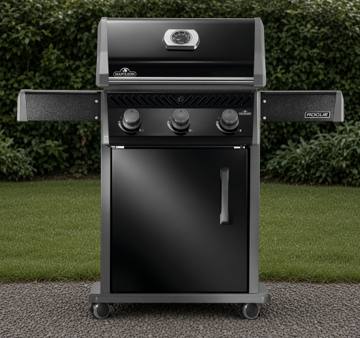
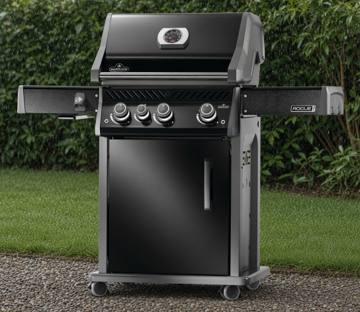
We pick the Napoleon Rogue 425
Buy the plain Rogue 425 unless a hard crust on thick steaks is a weekly habit. Under the main lid these are one grill: three burners, 42,000 BTU, cast iron grids over 425 sq in. Our PRO review priced it at $976 in November, $297 over the Rogue on Napoleon's sale prices. Our Rogue review checked $799.00 in October. The premium buys a 14,000 BTU infrared box on the left shelf. A taller lined lid, lit knobs and bigger shelves come with it. Only the infrared box changes what you can cook. Its ceramic can crack if water hits it hot. Our reviews score the Rogue 8.36 and the PRO 8.26.
What actually differs
-
Not one extra BTU under the lid
Same three burners, same 11 mm cast iron WAVE grids, same 151 sq in warming rack. None of the $297 reaches the main grate. Burgers and chops cook alike on both.
-
An infrared box on the left shelf
The PRO's side burner fires 14,000 BTU through its own 140 sq in grid, close to 100 per square inch. Glowing ceramic sends radiant heat right into the meat. It also frees the main grate for vegetables.
-
Headroom and light
The PRO's lid is high and lined, which suits a beer can chicken or a standing roast. Its white backlit knobs show every setting after dark. The Rogue keeps a low lid and dark knobs.
-
Two chores where the Rogue has one
Both want their cast iron oiled every three or four cooks. The PRO adds a ceramic burner that must stay dry while hot and never meet a wire brush. Its manual and Napoleon's Rogue warranty page give that burner 15 years, though one general Napoleon page says 3.
How they score, category by category
The Napoleon Rogue 425 scores higher in 3 categories, the Napoleon Rogue PRO 425 in 2 categories. One is level.
Level overall: within a tenth of each other.
-
Heat Performance
Counts for 25% of the scoreNapoleon Rogue 425 8.9Napoleon Rogue PRO 425 9.1 Better by 0.2Why the Napoleon Rogue PRO 425 scores 9.1Same 98 to 99 BTU per square inch as the Rogue 425, and a better sear than it from a 14,000 BTU infrared station.
Why the Napoleon Rogue 425 scores 8.9
About 98 to 99 BTU per square inch through 11 mm cast iron, against 86 on the Spirit E-325, though no sear or boosted burner.
-
Long-term Reliability
Counts for 20% of the scoreNapoleon Rogue 425 8.7 Better by 0.5Napoleon Rogue PRO 425 8.2Why the Napoleon Rogue 425 scores 8.7Fifteen years on every listed part, burners and grids included, but corrosion and chipped porcelain are excluded and dealer status needs checking.
Why the Napoleon Rogue PRO 425 scores 8.2
The manual and Napoleon's Rogue warranty page give every part 15 years, infrared included, but the ceramic burner can crack if soaked hot.
-
Build Quality
Counts for 18% of the scoreNapoleon Rogue 425 7.8Napoleon Rogue PRO 425 8.2 Better by 0.4Why the Napoleon Rogue PRO 425 scores 8.2Cast aluminum firebox, a high lined lid, stainless sear plates and rack, but the shelves and control panel stay powder coat.
Why the Napoleon Rogue 425 scores 7.8
Porcelain enamel lid and door with stainless burners and sear plates, but powder coat shelves, a low unlined lid and small shelves.
-
Ease of Use
Counts for 15% of the scoreNapoleon Rogue 425 8.4Napoleon Rogue PRO 425 8.4Level: within a tenth of each other.
Why the Napoleon Rogue 425 scores 8.4Battery free Jetfire lighting, locking casters and fold-down shelves, offset by unlit knobs and a heavy first lift out of the carton.
Why the Napoleon Rogue PRO 425 scores 8.4Battery free JETFIRE on the mains, white lit knobs and a folding shelf; the side station has its own igniter button.
-
Value
Counts for 12% of the scoreNapoleon Rogue 425 8.8 Better by 0.7Napoleon Rogue PRO 425 8.1Why the Napoleon Rogue 425 scores 8.8At $799.00 it matches the PRO-S 425 on the main grate and runs a denser fire than the $899.00 Genesis E-315.
Why the Napoleon Rogue PRO 425 scores 8.1
Infrared searing, a taller lid and lit knobs for $297 over the Rogue 425, yet the PRO 525 adds a fourth burner for $85 more.
-
Maintenance
Counts for 10% of the scoreNapoleon Rogue 425 6.7 Better by 0.3Napoleon Rogue PRO 425 6.4Why the Napoleon Rogue 425 scores 6.7Cast iron grids want seasoning every three or four cooks, and the warranty will not pay for the surface rust that follows neglect.
Why the Napoleon Rogue PRO 425 scores 6.4
Cast iron grids want oil every three or four cooks, and the ceramic burner must stay dry when hot and unbrushed: two routines, not one.
See all six scores in one table
| Category | Napoleon Rogue 425 | Napoleon Rogue PRO 425 |
|---|---|---|
| Heat Performance (25%) | 8.9 | 9.1 Better |
| Long-term Reliability (20%) | 8.7 Better | 8.2 |
| Build Quality (18%) | 7.8 | 8.2 Better |
| Ease of Use (15%) | 8.4 | 8.4 |
| Value (12%) | 8.8 Better | 8.1 |
| Maintenance (10%) | 6.7 Better | 6.4 |
| Avid Griller Score | 8.4 | 8.3 |
Both reviews are scored on the same six weighted categories, on the same 0 to 10 scale, and each reason is the one that review gave. A category is marked better only where the two differ by a tenth or more. How we score →
Heat density
Burner output over the surface it has to heat, derived in each review from that cooker's own published figures. A bigger number is not a better grill. It says how hard the cooker can drive its grate, nothing more. All grills ranked →
Where the spec sheets differ
Quoted from each maker's own specifications, as each review records them. Figures the two products publish identically are left out, so only the differences are listed.
Which one is for you
You grill burgers, chops and the odd steak on the main grate and would rather keep $297.
Check price →You sear thick cuts most weekends, often cook after sunset, and will keep the cover on.
Check price →More head-to-heads
Every score and figure on this page comes from our own reviews of these two products, linked above. We have not tested them side by side in one place; the comparison is between two full reviews, each built from the maker's published specifications and documentation. Prices move, and the ones quoted are the ones each review checked on its own date.